Quick answer
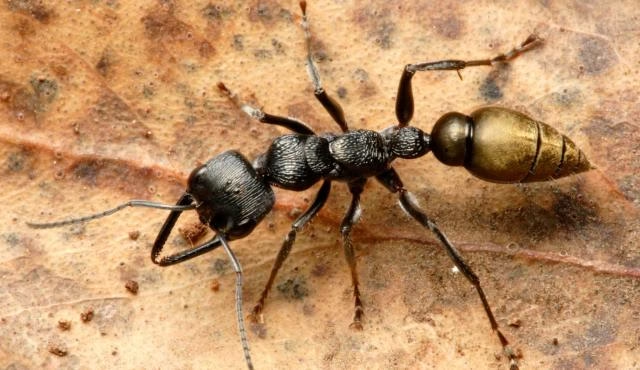
Golden-tailed bull ants are impressive Australian Myrmecia, but they need respect: secure housing, careful feeding access, long tools and no bare-hand handling. They are better for keepers who already understand escapes, stinging-ant safety and slow, deliberate maintenance.
This Golden-Tailed Bull Ant care guide for Myrmecia piliventris gives practical, hobbyist-focused advice for experienced Australian keepers. It covers safe housing, a step-by-step semi-claustral founding protocol, feeding, seasonal management and sting safety. Read the safety and containment sections carefully before collecting or keeping a queen.
1. Quick overview — is this species for you?
Myrmecia piliventris are spectacular, active predators with excellent vision and a painful, sometimes medically significant sting. This guide focuses on practical Golden-Tailed Bull Ant care for keepers who already have some experience. These ants are not recommended for beginners: keep them only if you can provide escape-proof housing, careful feeding and a healthy respect for their sting risk. For most first-time keepers, a look at Best Australian Ant Species for Beginners is the safer starting point.
They are rewarding ants to observe, but they are not forgiving of sloppy setup. Think strong lids, careful feeding and strict containment.
2. Natural history & distribution
Golden-Tailed Bull Ants occur across parts of south-eastern Australia and nest in soil under logs, stones and leaf litter. They prefer well-drained, shaded microhabitats. Hunting relies heavily on vision rather than long pheromone trails, so expect individual foraging behaviour rather than large recruitment columns.
Like other bull ants, they tend to do best when their enclosure gives them a sense of space, a secure nest and a clear foraging area. Their activity often shifts with temperature and season, so keep an eye on how the colony responds rather than relying only on a fixed schedule. Our seasonal temperature and humidity management guide covers the broader seasonal approach used by Australian keepers.
3. Safety, sting risks and first aid
M. piliventris have a powerful sting and are regarded as having medically significant venom. Stings commonly cause severe local pain and swelling; systemic allergic reactions, including anaphylaxis, are uncommon but possible. For a broader overview of safe handling, see Ant Stings & Bites in Australia: First Aid, Prevention and Safe Handling for Ant Keepers.
- Anyone with a known insect venom allergy should not keep stinging ants. Discuss risks with a doctor before attempting to keep Myrmecia species.
- If household members have anaphylaxis risk, keep adrenaline auto-injectors available and follow your doctor’s or ASCIA action plan.
- First aid for stings: move the person away from ants, wash with soap and water, apply a cold pack for pain and swelling, give an oral antihistamine for itching where appropriate, and seek medical attention for progressive swelling or respiratory symptoms.
Useful official references include ASCIA action plans for anaphylaxis and your relevant state or territory health service. For emergency symptoms, follow local medical advice immediately.
4. Legal and ethical sourcing
- Check state and local laws before collecting native wildlife; some councils, national parks and reserves prohibit collection. State biosecurity and wildlife rules can differ, so it pays to verify the current position before collecting.
- Collect responsibly: take a single queen when local collecting is allowed, avoid removing entire nests, and never introduce colonies outside their native range.
- Prefer common, locally sourced queens and avoid over-collecting from small populations.
Queens should also be quarantined before mixing with other ants or moving into established systems. The process is covered in our Quarantine New Ants guide.
5. Founding — step-by-step semi-claustral protocol
Golden-Tailed Bull Ant queens are semi-claustral: they must leave the nest to feed during founding. That changes the setup and the routine compared with fully claustral queens. If you are new to founding queens in general, the broader guides on What to Do with a Queen Ant After Capture and Test Tube Setup for Queen Ants are useful background, even though this species usually does better with a feeding arena attached.
What you need
- A secure formicarium with a dark nest chamber and an attached foraging arena so the queen can find food without getting lost.
- Live prey: small pinhead crickets, tiny roaches, fruit fly cultures or cut mealworms, plus small forceps or tongs for safe feeding.
- Small droplet feeder for sugar and a safe water source, such as a test-tube reservoir, wet cotton or a shallow well. Avoid drowning risks.
- Escape-proof lid and barriers — these ants are strong and persistent; see containment tips below and our guide on Ant Escape-Proofing 101.
Set up (day 0)
- Place the queen in the dark nest chamber attached to a clear or semi-clear foraging arena so you can monitor her foraging without disturbing her too often.
- Keep nest humidity moderate: substrate slightly damp but not wet. Aim for pockets that feel cool and slightly moist.
- Maintain warm ambient temperatures to encourage brood development — see the husbandry section for ranges.
Daily routine (first 1–8 weeks)
- Offer live protein every 1–2 days, such as a small cricket or tiny roach. Queens prefer live, moving prey they can handle alone.
- Offer a small droplet of sugar or honey water every 2–4 days for quick energy; keep amounts tiny to avoid mould and drowning.
- Check humidity weekly and top up water reservoirs as needed. Observe from outside the nest to reduce stress.
- Record eggs, larvae and pupae. Founding can be slow and fragile; patience and minimal disturbance pay off.
Expected timeline
- Egg to larva: 1–4 weeks, depending on temperature and feeding.
- Larva to pupa: 2–8 weeks, variable.
- Pupa to first workers: commonly 6–12+ weeks from egg in semi-claustral Myrmecia; cooler conditions lengthen development.
6. Housing & nest design
These ants can chew soft materials and are strong, so enclosures must be robust and escape-proof. A good nest is secure first, pretty second. That order matters.
If you are choosing between nest styles, our Ant Nests 101: Choosing the Best Formicarium for Your Colony guide is a handy comparison of the main options.
Recommended nest types
- Plaster or Ytong nests: Excellent humidity control and thermal buffering. Pros: good humidity management and easy to drill chambers. Cons: heavy and fragile if mishandled.
- Acrylic nests with moisturised substrate: Great visibility. Pros: clean and neat. Cons: visibility may stress some queens — provide dark covers for rest.
- Natural soil/sand setups: Most natural microclimate. Pros: realistic. Cons: harder to keep hygienic and observe brood; take steps to reduce mite and pest risks.
Hydration methods
- Screw-cap vial with cotton reservoir attached to the nest chamber — refill weekly as needed.
- Wet sponge or controlled misting for naturalistic setups, with close monitoring for mould.
- For plaster/Ytong nests, use a hydration channel to wick water slowly into chambers.
Monitor for mould: slightly moist is good; persistently wet causes mould and risks brood loss. If mould appears, dry the nest a little and remove affected material promptly. Persistent outbreaks may point to a bigger setup or hygiene issue, and our mould and fungal outbreaks guide covers the common causes and fixes.
7. Temperature & humidity — practical husbandry ranges
These ranges are keeper-tested starting points. Adjust to your local climate and the colony’s behaviour rather than treating them as rigid rules.
- Founding queens: 22–28°C; nest RH around 40–60% with slightly moist pockets.
- Established colonies: 18–25°C most of the year; brief cooler periods (15–18°C) can simulate a natural slowdown but avoid prolonged cold.
- Seasonal cycles: Mimic seasonal cues gradually by reducing or raising temperatures over weeks.
For practical Australian seasonal routines, refer to Seasonal Temperature & Humidity Management for Ant Keepers in Australia. Sudden swings are usually more trouble than they are worth.
8. Feeding established colonies
M. piliventris are active predators requiring regular protein plus opportunistic carbohydrates. Feeding should be varied, tidy and sized for the colony rather than the keeper’s enthusiasm.
Protein
- Feed live small crickets, pinhead roaches or small mealworm pieces. Match prey size to worker size so they can handle it — roughly the size of a worker’s head or slightly smaller.
- Frequency: small established colonies 2–3 times per week; growing or large colonies daily. Founding queens need protein every 1–2 days while producing brood.
- If mealworms are a regular feeder in your setup, our mealworm breeding guide is useful for keeping a steady supply without constantly buying more.
Carbohydrates
- Offer sugar solution or tiny droplets of honey 1–3 times per week. Keep droplets small and monitored to prevent mould and drowning.
Supplements
- Varied prey items provide a balanced diet; calcium or vitamin dust is generally unnecessary for Myrmecia if prey diversity is good.
9. Seasonal dormancy & winter care
- Golden-Tailed Bull Ants reduce activity in cooler months rather than entering a deep hibernation. Reduce temperature gradually by 2–3°C over several weeks heading into winter instead of making abrupt drops.
- Cut feeding back: protein every 7–14 days and carbohydrates sparingly. If brood is present, keep temperatures slightly warmer to allow development.
- Maintain water availability — check reservoirs every 1–2 weeks even in winter.
- Warm slowly in spring to stimulate activity and brood production.
Seasonal changes are easier to manage when the setup itself is stable. If the colony is still small, avoid major nest changes at the same time as seasonal cooling.
10. Common problems, diagnostics & troubleshooting
Queen not laying eggs
- Possible causes: unmated queen (only produces males), stress, insufficient protein, wrong temperature or dehydration.
- Fixes: reduce disturbance, offer live prey daily, raise temperature to around 24–26°C for a few weeks and ensure moderate humidity. Persistent male-only broods usually indicate an unmated queen.
High worker mortality
- Possible causes: poor diet, mites or pathogens, temperature stress or injuries from escapes.
- Fixes: review diet and feeding frequency, improve hygiene in the foraging area, check for parasites and quarantine new food items. For more on parasite prevention, see Preventing Mites.
Mould, damp or collapsed brood
- Causes: excessive humidity or poor ventilation.
- Fixes: allow nest to dry slightly, improve ventilation and replace heavily mouldy substrate. Sterilise replacement soil in small batches if using natural substrate.
11. Containment & escape prevention
- Use secure lids and physical barriers plus a fluon or PTFE coating on vertical surfaces where appropriate. Our Ant Escape-Proofing 101 guide explains barrier types and application.
- Double-check lids after feeding — workers can push weak lids or exploit gaps.
- Keep formicaria on non-climbable surfaces and out of reach of children and pets; consider keeping enclosures inside a locked cabinet for extra safety.
- Move colonies only with proper restraint and planning. For larger colonies, our upgrading your formicarium guide is a useful reference before adding space.
12. Growth checklist
Use this as a simple on-page reference while the colony develops:
- Day 0: Queen collected and placed in nest with attached foraging arena.
- Weeks 1–4: Queen establishes; lays eggs — offer live prey every 1–2 days.
- Weeks 6–12+: Larvae develop to pupae and first workers appear. Continue regular feeding and stable temperatures.
- Months 3–12: Colony grows; when space becomes limiting, consider upgrading to a larger formicarium following best practices.
For a broader view of what growth usually looks like, see Understanding Ant Colony Growth Stages.
13. FAQ
Can I keep workers only?
Workers survive temporarily with food, but without a queen the group cannot sustain a colony. Keep workers short-term only or release them back to the wild where local rules permit.
How often should I handle them?
Avoid handling. M. piliventris are aggressive and sting. Use jars and forceps for transfers and minimise nest disturbance. See the moving-to-formicarium guide for safe transfer steps.
Can they be kept with other ant species?
No. Myrmecia are predators and will attack other ants; never mix species in one setup.
Are they suitable for a bioactive setup?
Usually not as a first choice. They can work in some naturalistic systems, but the keeper needs tight control over moisture, pests and escape risk. For background on planted and more natural systems, see How to Build a Bioactive Formicarium in Australia.
14. Further reading & official links
- Australian Museum — bull ants and Myrmecia information
- Atlas of Living Australia — species records and distribution data
- ASCIA — anaphylaxis action plans and insect sting allergy information
- NSW Health — insect sting information and first aid guidance
- Relevant state biosecurity and wildlife authorities for collection rules in your area
- Hölldobler, B. & Wilson, E.O. (1990) The Ants — classic reference for ant biology and behaviour
Final thoughts
Myrmecia piliventris are an advanced and rewarding species for experienced keepers who put containment and human safety first. Follow local laws, keep careful records and prioritise escape prevention. The species is beautiful, but it deserves respect — and a lid that actually closes properly.
Author: Ant Keeping Australia editorial team. Last reviewed: 2026-03-30.
Related Ant Keeping Australia guides
- Known Native Australian Ant Species — source-of-truth species list and coverage map
Sources and further reading checked