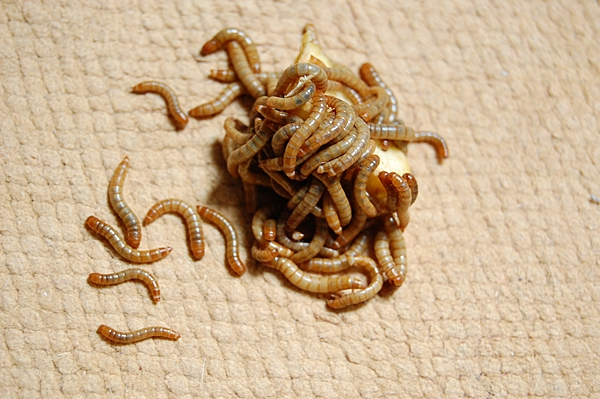
Breeding Mealworms – The Ultimate Feeder Insect Guide for Ant Keepers

Breeding mealworms at home gives ant keepers a cheap, controllable protein source and lets you match feeder size and nutrition to your colony. This guide covers practical setup, staggered production, Australian biosecurity tips and troubleshooting, including a feeding-size table so you can safely prepare mealworms for the right ants.

Breeding mealworms: quick reference

Stage Target Notes
Breeding temp 24–28 °C Fastest development; increase to 26–28 °C to speed up slow tubs
Moderate growth 20–22 °C Slower timing for planned harvests
Storage/hold 4–8 °C (short term) Slows metabolism — don’t store for months
Relative humidity 40–60% RH Avoid prolonged >70% (mould/mites) or <30% (desiccation)
Turnover Replace veg every 2–3 days; sift frass weekly–fortnightly Observe and adjust to your local room conditions

1. Why breed mealworms?

  • Control: Time harvests, adjust feeder size and gut-load before use.
  • Cost and space efficient: A few tubs on a shelf will supply most hobby colonies.
  • Staggered life stages: Keep larvae, pupae and beetles going so you never run out.

2. Starter kit: what you actually need

  • Starter culture: 500–1,000 mealworms (mix of larvae and beetles) from a reputable local reptile shop or feeder breeder. Ask about pesticide use and recent health.
  • Container: Smooth-sided plastic tubs (HDPE/PP) or shallow drawers; 10 cm depth is helpful for pupation.
  • Ventilation and lid: Fine metal mesh (~1 mm) over ventilation holes and a snug lid. See our escape-proofing lids and barrier ideas — beetles are surprisingly good climbers.
  • Bedding: Wheat or oat bran, 3–5 cm depth; sift and top up rather than replacing everything at once where possible.
  • Moisture: Carrot, potato or apple pieces on cardboard or a shallow lid; replace every 2–3 days.
  • Tools: Coarse sieve for frass, small trays for pupae, a basic thermometer/hygrometer and dedicated utensils.

3. Quarantine and Australian biosecurity checklist

Quarantine new mealworms for 7–14 days in a separate room. Look for mites, dead beetles or unusual smells. Freeze new dry bedding such as bran or oats for 48–72 hours before use to help reduce hitchhiker eggs. Keep dedicated tools and wash hands between tubs.

  • Freeze new dry goods for 48–72 hours to reduce pest eggs.
  • Keep mealworm tubs away from active ant workspaces to avoid accidental introductions.
  • Discard heavily infested substrate; transfer healthy animals to clean tubs.
  • Check DAFF guidance if you’re importing live insects or materials: DAFF biosecurity trade and import information.

For a deeper dive on mite prevention, see our Preventing Mites guide. If you’re setting up a new feeder culture, it also helps to think of it like a quarantine job, not just a storage tub — quarantine principles matter here too.

4. Set up step by step

  1. Clean the tub: Use a smooth-sided container that is dry and free of residue, then add 3–5 cm of bran.
  2. Add stock: Start with larvae plus a handful of beetles. For tighter control, keep a separate breeder tub for beetles.
  3. Add moisture food: Place carrot or potato on cardboard or a yoghurt lid; swap every 2–3 days.
  4. Fit ventilation and lid: Use mesh over holes and a snug lid to stop escapes.
  5. Place the tub: Keep it at a stable 24–28 °C for fast growth and out of direct sun.

Tip: sift tubs every 1–2 weeks. It keeps frass down and makes pupae easier to spot and move.

5. Mealworm life cycle and timing

  • Egg: 4–19 days.
  • Larva: 8–12 weeks at 24–28 °C — the main feeder stage.
  • Pupa: 1–3 weeks; move to a nursery tray if you want beetles.
  • Beetle: Lives 1–3 months and lays eggs after about 1–2 weeks.

Separate breeder, grow-on and nursery tubs if you can — it makes staggered harvesting much easier and protects breeders from hungry larvae.

6. Feeding presentation: mealworms for different ant sizes

Ant size / group Recommended mealworm presentation Reason / notes
Tiny workers (eg. Pheidole minors, small Monomorium) Diced 2–5 mm or mashed pre-killed pieces Too small to carry whole larvae; diced pieces allow trophallaxis
Small/medium workers (eg. small Camponotus, many Iridomyrmex) Diced 5–10 mm or small whole pre-killed larvae Manageable pieces; pre-kill to avoid burrowing or escape
Large workers (eg. Myrmecia, large Camponotus) Whole live or pre-killed larvae (live only if confident) Can capture live prey; pre-killed is cleaner and safer
Tiny specialists (eg. recently founded colonies) Fruit flies or powdered diets instead of mealworms Even diced mealworms can be too big for founding workers

For species-specific guidance, see our care pages — for example the Big-Headed Ant (Pheidole) and several Myrmecia guides linked from our species list.

7. Preparing mealworms for feeding: gut-load and kill

  • Gut-load: Feed for 24 hours on carrots, leafy greens or quality fish flakes to boost nutrition before offering them to ants. More details are in our Ant Feeding Guide.
  • Pre-kill: Freeze live mealworms for at least 24 hours to kill or stun larvae.
  • Serve: Thaw and dice for small species, or offer whole or halved for larger workers. Use a shallow dish to reduce escapes when offering live prey.

8. Harvest calendar: sample staggered schedule

Use three tubs — breeder, grow-on and nursery — rotated every 3–4 weeks to maintain a steady supply. Example monthly rhythm:

  • Week 1: Move newly emerged beetles to the breeder tub so eggs are laid there.
  • Week 3: Move large larvae to the grow-on tub for finishing.
  • Week 6: Move pupae to a nursery tray; transfer emerged beetles to the breeder tub.
  • Ongoing: Harvest larvae from the grow-on tub every 2–4 weeks depending on colony needs.

Keep a simple log with dates, temperatures and major actions — it’s the easiest way to predict a reliable harvest.

9. Troubleshooting and mite remediation checklist

Most problems come from moisture imbalance, poor hygiene or contaminated new stock. Use this mite-remediation checklist early if things look off:

  1. Isolate: Quarantine the affected tub(s) immediately to stop spread.
  2. Assess: Are mites visible as tiny, fast specks, or is it just dust/frass? Check under veg and in corners.
  3. Remove healthy animals: Using a clean, dry sieve or soft brush, transfer healthy larvae and beetles to a sterilised spare tub with fresh bran.
  4. Discard contaminated substrate: Seal and bin old substrate and contaminated tools, or freeze them for 72 hours before disposal.
  5. Clean and dry: Wash tubs in hot soapy water, rinse and dry completely. Surface-sterilise lids and tools if practical.
  6. Reduce humidity and improve airflow: Dry bedding slightly and move tubs to a less humid location; minimise soggy veg contact.
  7. Prevent re-introduction: Freeze new dry goods for 48–72 hours and keep dedicated utensils for mealworm work.
  8. Monitor: Check quarantined animals daily for a week. If mites persist, repeat the transfer and cleaning steps.

For broader prevention and long-term strategies, see our full Preventing Mites guide.

10. Common problems and short fixes

  • Mould: Remove rotten veg, increase airflow and replace bedding if needed.
  • Slow growth: Raise temperature to 26–28 °C and ensure a small protein boost, such as fish flakes, while avoiding fouling.
  • Escapes: Smooth any textured walls, check the lid seal and mesh, and move tubs away from ant benches — see escape-proofing.
  • Bad odour: Sift frass and remove rotten food immediately — smell is often the earliest sign of trouble.

11. Disposal, safety and Australian legal notes

  • Do not release beetles or larvae into the environment — dispose of them by freezing sealed bags and placing them in general waste.
  • Check DAFF biosecurity if importing live insects or materials: DAFF biosecurity trade and import information.
  • Avoid feeding ants mealworms reared on pesticide-treated food.
  • If you’re dust-sensitive, wear a mask when sifting frass and wash hands after handling.

12. Alternatives and when to choose them

Mealworms are versatile, but sometimes another feeder is a better fit:

  • Superworms (Zophobas morio): Larger and good for big predators, but harder to store cold.
  • Black soldier fly larvae (BSFL): High moisture and protein, which makes them a strong nutrient boost, but they need different husbandry.
  • Crickets, roaches and fruit flies: Use fruit flies for tiny colonies and crickets for active live-hunting species.

13. FAQs

How long do I need to freeze mealworms to kill them?

Freeze live mealworms for at least 24 hours to kill or stun larvae. For dry goods such as bran or oats, freeze for 48–72 hours where practical to reduce eggs and hitchhikers.

How long can I store live mealworms in the fridge?

Short-term holding at 4–8 °C will slow them for a few weeks, but prolonged cold increases mortality. Use refrigeration only to pause production briefly.

Can I feed live mealworms to small ant colonies?

No — small workers struggle with whole larvae. Dice or pre-kill for small species; use fruit flies or powdered diets for founding colonies.

What temperature is best for fast breeding?

24–28 °C gives the fastest development, and 26–28 °C helps speed up slow tubs. For planning, 20–22 °C is useful to slow maturation.

14. Further reading

For feeding technique and gut-loading strategies, see our Ant Feeding Guide. If you’re new to species selection, our Best Australian Ant Species for Beginners page can help match colony size to feeder choices. When you’re ready to move a queen from founding stages into a nest, the moving-to-formicarium guide is handy for the next step.

Final thoughts

Breeding mealworms is a practical, low-cost way to support ant colonies when you keep humidity, hygiene and biosecurity in check. Use the feeding-size table and staggered harvest schedule above to plan ahead, and keep a log — rhythm and cleanliness make the job much easier.

1 thought on “Breeding Mealworms – The Ultimate Feeder Insect Guide for Ant Keepers”

  1. Hello, i read your blog from time to time and i own a similar one and i was just curious if you get a lot of spam responses? If so how do you protect against it, any plugin or anything you can advise? I get so much lately it’s driving me mad so any support is very much appreciated.

Leave a Comment

Your email address will not be published. Required fields are marked *