
| Scientific name | Polyrhachis ammon |
| Common name | Golden Spiny Ant |
| Worker size | ~6–10 mm |
| Queen size | ~10–12 mm |
| Queen lifespan | ~10+ years |
| Worker lifespan | ~1–2 years |
| Colony type | Monogynous (single queen) |
| Activity | Diurnal — active in daylight |
| Habitat | Dry woodlands, open forests, coastal scrub in northern & eastern Australia |
| Nuptial flights | Usually warmer humid periods after rain; late spring to summer is a common watch window, but timing varies by region and species ID. |
| Founding style | Semi‑claustral — queen requires feeding while founding |
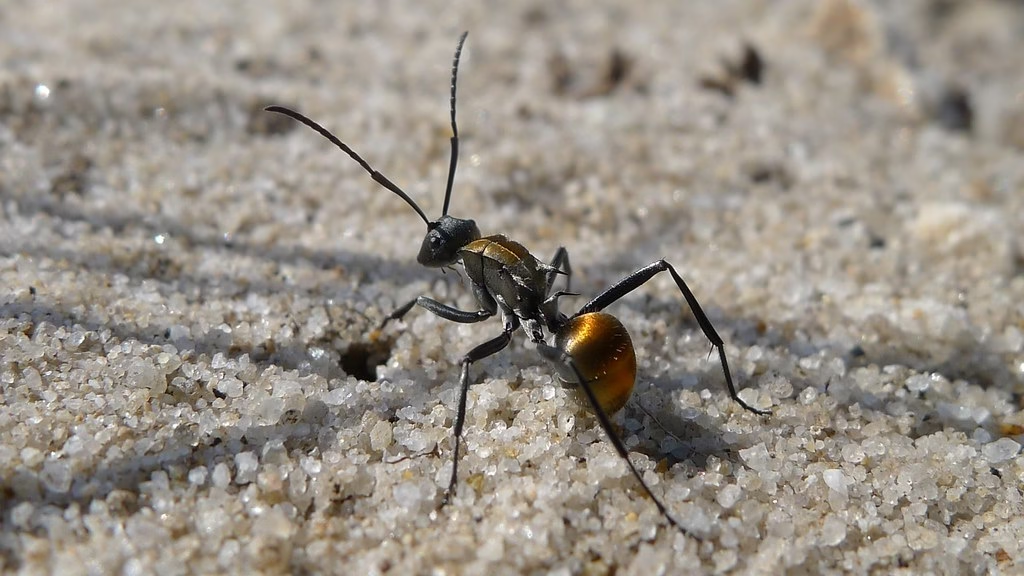
Polyrhachis ammon vs Polyrhachis dives: quick clarification
If you searched for Polyrhachis dives nuptial flight time, do not blindly apply overseas P. dives advice to Australian golden spiny ants. This guide is for Polyrhachis ammon, an Australian species often discussed under the broader “spiny ant” or “golden spiny ant” label. For Australian keepers, treat flight timing as seasonal and weather-driven: warm humid periods after rain in the warmer months are more useful than one fixed calendar date.
When ID is uncertain, record location, date, size and clear photos, then keep the queen conservatively in a secure semi-claustral founding setup until you confirm the species. Do not move ants between regions just to solve an ID problem.
Fast name check for searchers
| Name people search | What to know | Best next step |
|---|---|---|
| Polyrhachis ammon | Australian golden/golden-tailed spiny ant; the main species this guide covers. | Use the care, founding and flight notes below. |
| Polyrhachis dives | A different spiny ant name that often appears in global search results and overseas keeping discussions. | Do not copy P. dives timing or care without checking local Australian records. |
| Golden spiny ant | A common hobby name that may be used loosely across spiny-looking Polyrhachis. | Confirm the exact species before making species-specific care calls. |
| Spiny ant queen | Useful visual clue, but not a confident ID by itself. | Photograph the queen from above and side-on, with location/date/weather notes. |
Quick answer
Golden Spiny Ants (Polyrhachis ammon) are striking, active Australian ants best suited to keepers who can provide secure housing, steady sugar access, careful protein feeding and moderate moisture control. They are display-worthy, but still need proper containment and species-aware care.
This Golden Spiny Ant care guide is aimed at Australian hobbyists searching for Polyrhachis ammon, spiny ant queens, flight season, founding and day-to-day care. It covers ID, semi‑claustral founding, temperature and humidity bands, a simple brood timeline, feeding schedules, escape prevention and common problems. If you’re after a showy, daytime species for observation and photography, this guide will help you keep them healthy without pretending they are a no-effort beginner ant.
Quick care summary — Golden Spiny Ant at a glance
- Temperature: active care 24–28 °C; reduced activity 18–22 °C in winter.
- Humidity: room RH 40–60%; nest chambers ~50–70% RH (localised moist pocket).
- Founding: semi‑claustral queen — feed tiny protein every 2–3 days and offer sugar daily.
- Feeding: sugar daily; protein 2–4×/week depending on colony size.
- Housing: ventilated, warm, escape‑proof; use PTFE/Fluon barriers and tight lids.
- Move from test tube at ~15–20 workers with mixed brood stages.
Identification & behaviour
- Metallic/golden sheen on the gaster — often obvious in daylight.
- Spiny, armour‑like thorax and pronotum.
- Diurnal foragers: active in daylight which makes them ideal for observation and photography.
- Generally low aggression to humans — they may bite but are not known for medically significant stings.
Distribution & simple map
Polyrhachis ammon occurs mainly in northern and eastern Australia: Queensland, New South Wales, parts of the Northern Territory and northern Western Australia. Typical habitats include dry sclerophyll and open eucalypt woodland, scrub and savannah.
When to look for queens (nuptial flights)
- Season: often late spring to summer in suitable parts of Australia, with local variation.
- Weather: warm, humid periods after rain are the main trigger to watch.
- Time: late afternoon, evening or night around suitable weather windows.
- How to spot a queen: larger thorax, around 10–12 mm, sometimes on low vegetation, lights, paths or near likely nest sites.
Golden spiny ant flight season checklist
| Do watch | Warm humid days after rain, especially when other local ants are flying. |
| Do record | Suburb/region, date, temperature feel, rainfall, time found and photos. |
| Do not assume | That an overseas Polyrhachis dives flight calendar applies to Australian Polyrhachis ammon. |
| Found one? | Use a semi-claustral test tube routine: sugar access, tiny protein portions and minimal disturbance. |
Founding — semi‑claustral queens & test‑tube routine
Golden Spiny Ant queens are semi‑claustral: they need regular feeding during founding (they don’t rely solely on internal reserves). Use a quiet, dim test‑tube setup and check only occasionally.
Test‑tube setup (step by step)
- Use a glass or hard plastic tube ~16–20 mm diameter, cleaned before use.
- Fill about one third of the tube with water and plug with cotton so it can’t flood the chamber but keeps humidity.
- Add a second cotton plug to create a dry chamber for the queen and brood.
- Keep the tube mostly dark (wrap in foil or place in a dark box). Disturb only every 5–10 days unless there’s an issue.
- Temperature: 24–28 °C for active founding — lower temps (20–22 °C) will slow development significantly.
For a visual step‑by‑step see our Test Tube Setup guide.
Feeding a semi‑claustral queen — exact routine
- Protein: tiny portions every 2–3 days while founding — 1–2 fruit flies, a pinhead of crushed mealworm, or a fleck of cooked egg. Keep pieces so small the queen and workers can carry them easily.
- Sugar: a droplet of diluted honey or 20% sugar water daily or every 1–2 days (placed on a micro‑cap or toothpick). Avoid wet cotton and sticky mess.
- Presentation: use fine forceps or a blunt needle; a micro‑cap from a medicine bottle or pill lid works well as a test‑tube dish.
- Watch for mould — if it appears, transfer quickly to a clean tube using our Move to New Test Tube guide.
See our full Test Tube Setup for Queen Ants for photos and troubleshooting.
Brood development timeline (typical)
These are approximate durations; temperature has a major effect. The table below helps you plan feeding and when to move the colony.
- At 25 °C (typical active range):
- Egg → larva: 7–12 days
- Larva → pupa: 12–20 days
- Pupa → worker eclosion: 10–16 days
- Total egg → worker: ~30–48 days
- At 20 °C (cooler/slower):
- Total egg → worker: ~50–80+ days (development slows considerably)
Practical note: wait until you have ~15–20 workers and mixed brood stages before moving out of the test tube.
Formicarium & nest design
Golden Spiny Ant care prefers warm, well‑ventilated nests with a slightly drier display environment but with locally moist brood chambers. Remember these ants climb very well — escape proofing is essential.
Recommended features
- Ventilation: good airflow to avoid condensation but maintain humidity in brood chambers. See our Ant Nests 101 guide for nest choice basics.
- Materials: acrylic nests or 3D printed nests for viewing; a small soil pocket or leaf litter suits natural behaviour.
- Humidity: room RH 40–60%; keep chamber pockets at ~50–70% RH by damp substrate or a small water reservoir placed away from traffic.
- Substrate: sandy loam or mixed soil in a shallow layer for display nests; deeper substrate if allowing digging.
- Escape prevention: use tight lids and PTFE/Fluon barriers on all internal exits; our Ant Escape‑Proofing guide is helpful here.
Feeding & water — schedule and tips
Golden Spiny Ants are sugar‑loving but need protein for brood growth. Follow a clear feeding schedule to avoid overfeeding and pests.
- Sugar: small droplet of 20% sugar solution or diluted honey (1:4 honey:water) daily. Replace every 24–48 hours to avoid mould.
- Protein: offer protein 2–4 times per week depending on colony size. Founding queens: every 2–3 days as above. Growing colonies: increase frequency and quantity as worker numbers rise.
- Feeder types: tiny mealworm pieces, fruit flies, small cricket parts, or cooked egg/chicken bits. Breeding your own mealworms is a reliable feeder source — see the mealworm feeder guide.
- Presentation & cleanliness: use micro‑caps, tiny lids or forceps; remove leftovers after a few hours to reduce mite risk.
- Best practical feeder: for most keepers, mealworms are the easiest staple because they are available, portionable and less chaotic than loose crickets. Fruit flies are useful for tiny colonies.
For a full rundown on diet and feeding techniques see the ant feeding guide.
Colony growth & social structure
- Monogynous — single queen. Don’t try to merge unrelated colonies.
- Starting colonies will grow slowly; with good care they often reach tens to a few hundred workers over time.
- Provide steady protein during growth phases to avoid brood starvation.
Seasonal care
- Active keeping: maintain 24–28 °C year‑round if you want continuous brood production.
- Reduced activity in winter: lower to 18–22 °C and reduce feeding frequency (protein every 1–2 weeks, sugar less often). Avoid abrupt temperature swings.
- Be cautious: keeping them warm year‑round increases food needs and workload.
Common problems & troubleshooting
Queen not laying
- Common causes: stress, disturbance, low temperature or an unfertilised queen. Fixes: minimise checks, keep at 24–28 °C, and give time.
Mould
- Remove contaminated substrate or replace the test tube. Keep sugar off cotton and avoid over‑humidifying. Transfer queen if mould returns—see our guide on moving a queen to a new test tube.
Mites & other pests
- Keep feeding areas clean and remove uneaten food. For prevention and treatment options see our Preventing Mites guide.
Escapes
- Double barriers (PTFE + moat), tight lids, and careful tubing seals stop most runaways — our Ant Escape‑Proofing guide has product suggestions and diagrams.
Moving a colony to a new nest
- Place the new nest beside the old one and connect with a dark tube. Place sugar/protein in the new nest to attract workers.
- Dim lighting and allow a natural migration. Applying gentle warmth to the new nest can speed the move.
- Avoid forcibly removing the queen unless absolutely necessary. If you must move her, follow the step‑by‑step transfer guide to reduce brood loss.
See our detailed Moving Your Queen Ant to a Formicarium guide for photos and techniques.
Handling, safety & ethics
- Golden Spiny Ants are not highly hazardous. Avoid unnecessary handling; use brushes and forceps for transfers.
- Never release captive ants into the wild. Check local collection rules and never collect in protected areas or private land without permission.
Photography & observation tips
- Use diffuse daylight or soft LED to show off the golden sheen without glare.
- Macro lenses and a shallow depth of field bring out thoracic spines and gaster colour. A tiny sugar droplet can help position for photos.
FAQ
Q: How long until I can move a founding queen to a formicarium?
A: Wait for ~15–20 workers and mixed brood stages (eggs, larvae, pupae). For semi‑claustral Polyrhachis ammon this gives the colony resilience to handle the move.
Q: My colony seems overcrowded in the test tube — what now?
A: If you have the worker count and mixed brood, prepare a small formicarium and connect it with a dark tube so workers can scout and move voluntarily. Avoid ripping brood out — gradual migration is less stressful.
Q: What if I find the queen after her nuptial flight but she’s weak?
A: Provide warmth (24–26 °C), humidity, and tiny protein plus a sugar droplet. Keep disturbance to a minimum and follow the test‑tube feeding routine.
Further reading & useful internal links
- Ant Feeding Guide — detailed feeder types, schedules and presentation.
- Preventing Mites: How to Keep Your Ants Safe from Infestations — hygiene and treatment options.
- Test Tube Setup for Queen Ants — step‑by‑step photos and common pitfalls.
- Moving Your Queen Ant to a Formicarium — transfers and low‑stress migration techniques.
- Ant Escape‑Proofing 101 — best barriers and lids to stop runaways.
Final thoughts
Golden Spiny Ant care rewards patient keepers: their colour, diurnal activity and tidy colonies are great for observation and photography. Respect the semi‑claustral founding requirements, keep temperatures and humidity steady, maintain clean feeding habits, and make sure the setup is escape‑proof. With these small efforts you can enjoy healthy Polyrhachis ammon colonies for years.
Related Ant Keeping Australia guides
- Known Native Australian Ant Species — source-of-truth species list and coverage map
Sources and further reading checked
Golden spiny ant keyword FAQ
What is Polyrhachis ammon?
Polyrhachis ammon is commonly referred to as the golden spiny ant. It is known for its attractive body shape and spines, but beginners should still treat it as a species that needs stable housing, careful humidity and good escape prevention.
Is Polyrhachis ammon the same as Polyrhachis dives?
No. Polyrhachis ammon and Polyrhachis dives are different ants. Search results often mix spiny ant names, so check the exact species before copying care advice, especially around temperature, nesting habits and nuptial flight timing.
When is golden spiny ant nuptial flight season?
For Australian golden spiny ants, watch warm humid periods after rain during the warmer part of the year. Search demand often mentions Polyrhachis dives, but P. dives and P. ammon are not the same species, so use local records and confirmed ID before relying on a specific nuptial flight month.
How do you care for a Polyrhachis ammon queen?
Treat a suspected Polyrhachis ammon queen as semi-claustral: a clean test tube, low disturbance, sugar access, tiny protein portions every few days and a secure mini outworld once feeding inside the tube becomes messy.
What do golden spiny ants eat?
They need sugars for worker energy and protein for brood growth. Use tiny mealworm pieces, fruit flies or small cricket parts, and remove leftovers before they foul the nest.
Are golden spiny ants beginner friendly?
Golden spiny ants are better for keepers who already understand test tubes, feeding, humidity and escape prevention. They are beautiful, but pretty ants still deserve boringly good husbandry.






Pingback: Ant Nests 101: Choosing the Best Formicarium for Your Colony - Ant Keeping Australia