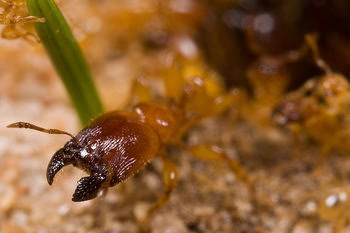
| Scientific name | Pheidole antipodum |
| Common name | Big‑Headed Ant |
| Size | Workers: 2–4 mm | Soldiers (majors): ~4–5 mm | Queens: 8–9 mm |
| Lifespan | Queens ~5 years (typical) | Workers ~1 year (typical) |
| Colony type | Monogynous (single queen) |
| Foraging | Nocturnal & crepuscular (dawn/dusk) |
| Habitat | Dry regions of mainland Australia; subterranean nests under rocks, in loose soil |
| Diet | Likely termite predators in the wild; accept sugars and small arthropods in captivity |
| Nuptial flights | Late spring–early summer (Nov–Dec), warm humid evenings after rain |
| Founding style | Fully claustral (queen does not need feeding while founding) |

Introduction — why keep Pheidole antipodum?
Big‑Headed Ants are a great choice for hobbyists who want striking caste differences without a sprawling, invasive colony. The dimorphism — tiny, busy minors and chunky‑headed majors — makes daily observations rewarding: you’ll watch food processing, task specialisation and soldier patrols in a compact, manageable group.
Where they come from & natural behaviour
These ants occur across much of inland Australia’s drier regions. They favour loose, well‑drained soils and are often associated with termites and other soil arthropods. Wild nests are subterranean with shallow galleries and chambers for brood, food stores and queen retreat.
Distribution highlights: inland NSW, semi‑arid Queensland, SA mallee and parts of WA. For taxonomic records consult AntWiki and the Atlas of Living Australia (see Resources below).
Catching queens — timing, permits and tips
Nuptial flights usually occur late spring to early summer (November–December), on warm, humid evenings after rain. Queens are noticeably larger (8–9 mm) with a robust thorax — look near remnant vegetation, under streetlights and along roadsides after storms.
Practical steps
- Best time: dusk to early night on warm, humid nights after rain.
- Kit: small ventilated vials or 16–20 mm test tubes for transport, firm cotton plugs, padded container, and a torch with a red filter or dim light to minimise disturbance.
- Pickup: gently scoop a queen into a tube and plug with cotton; keep her dark and stable until you set up a proper founding tube.
Legal & ethical collecting (Australia)
- Do not collect in national parks or protected areas without a permit. Check state/territory park rules (NSW, Victoria, Queensland, WA, SA) before you collect.
- Take only a few queens from a single location to avoid local impacts. Never release captive ants back into the wild — this risks disease spread and genetic mixing.
- If unsure, contact your local council or park authority for guidance.
Founding stage — test tube setup and routine
Pheidole antipodum queens are fully claustral and do well if left undisturbed with a stable microclimate.
Test tube details
- Tube size: 16–20 mm internal diameter, 100–120 mm length. For especially large queens 25 mm ID works — but keep the space cosy.
- Water reservoir: fill around one third of the tube and press cotton firmly to make a long, stable reservoir. Refill or replace every 4–8 weeks depending on evaporation.
- Plugs: use two cotton plugs: one sealing the water and a second between water and queen so she cannot crawl into the reservoir.
- Darkness & vibration: wrap or store where it’s dark and still — minimal light and vibration encourages egg laying.
- Temperature: steady 24–28 °C during founding (see Microclimate targets below).
Routine & timeline (typical)
- Check tube only every 1–2 weeks during the first 8–12 weeks.
- Egg → first workers (nanitics): typically 4–12 weeks depending on temperature; faster at 26–28 °C.
- First worker numbers: expect 5–30 nanitic workers in initial months.
- When to move: consider a small formicarium when you have ~20–30 active workers and consistent brood care — move carefully (see Moving a queen guide linked below).
Colony growth expectations and milestones
Growth varies by food availability, temperature and queen health. Typical, conservative milestones are:
- 0–3 months: queen + brood; first 5–30 nanitic workers.
- 3–6 months: 30–150 workers; majors appear after steady protein intake.
- 6–18 months: 150–600 workers for a well‑fed colony; majors can stabilise at ~10–25% of workforce depending on needs.
- 2+ years: several hundred to low thousands for long‑lived colonies; growth slows as space and resources limit expansion.
Pheidole species often regulate soldier production based on colony diet — more protein usually encourages major development.
Housing & nest options once you have workers
These ants prefer relatively dry nests with rooms roomy enough for majors to manoeuvre. Below are chamber and gallery suggestions for DIY or pre‑made formicaria.
Recommended chamber & gallery dimensions
- Minor worker galleries: 2–3 mm wide.
- Major galleries & thresholds: 4–6 mm wide so soldier heads can turn and carry prey.
- Chamber heights: 6–10 mm for brood; 10–14 mm for soldier or communal chambers.
- Chamber diameters: 10–20 mm for early brood pockets, scaling to 30–50 mm as colony grows.
Example small formicarium layout: 5–7 chambers — brood pockets (15 × 8 mm), food chamber (20 × 10 mm), main chamber (30 × 12 mm) with 3–6 mm corridors and a separate hydration chamber.
Common nest types — pros & cons
- Acrylic nests — clear, easy to clean. Keep cavities dry; use an external reservoir.
- Ytong / aerated concrete — natural texture and moderate moisture retention; hydrate sparingly.
- 3D‑printed nests — customisable; ensure smooth entrances and fine tolerances so tiny workers don’t get trapped.
- Naturalistic soil setups — good for digging but higher maintenance and escape risk with small workers.
Escape prevention is important: use fresh PTFE/Fluon barriers, tight lids and fine mesh on vents. For transfer procedures see our step‑by‑step guide on moving a queen to a formicarium (Move Queen Ant from Founding to Formicarium).
Feeding — practical advice
In the wild P. antipodum likely hunt termites and small arthropods. In captivity they accept sugar and small protein items — mimic the variety and size of their natural prey.
For a full overview of feeding choices, feeders and recipes, see our detailed feeding guide: The Ultimate Ant Feeding Guide.
Protein — size & frequency
- Founding colonies (5–30 workers): 1–3 tiny pieces (pinhead to 2–3 mm) of freeze‑killed protein twice a week — e.g. chopped mealworm, cricket legs, or fruit flies.
- Medium colonies (30–150): 3–6 pieces per feed, 2–3 times per week. Occasional live prey (pinhead crickets) is fine if safely contained.
- Large colonies (150+): 6–12 pieces per feed or a single larger prey item (4–6 mm) a few times weekly; remove uneaten protein after 24 hours to prevent mould.
Sugar & liquids
- Offer 10–30% sucrose solution or diluted honey in tiny droplets every 2–3 days — more in hot weather or during heavy brood rearing.
- Use a dropper and place drops on foil, waxed paper or a small plastic dish to avoid wetting the nest; replenish daily to every 3 days based on consumption.
Special treats & brood seasons
- During heavy brood production, supplement with protein‑rich treats (small bits of cooked egg yolk or specialised insectivore food) in tiny amounts.
- For live prey, ensure prey size is smaller than worker head width and that prey cannot injure brood (use internal feeding arenas with escape barriers).
Microclimate & seasonal care — quick targets
For adjusting temperature and humidity across the year see our Seasonal Care guide with practical tips for Australian climates: Seasonal Care for Ant Colonies in Australia.
Signs of a healthy colony & what to watch for
- Steady brood progression: eggs → larvae → pupae → workers on a schedule consistent with your temperature.
- Nocturnal foraging and workers returning with prey or sugar.
- Clean brood, well‑groomed workers and a calm queen with attendants.
- Warning signs: abandoned brood, sudden spike in dead workers, visible mites, persistent mould, or a lethargic queen.
Common problems, pests & troubleshooting
Typical pests
- Mould / fungal outbreaks — usually from over‑watering or decaying food.
- Mites — small dark specks on workers or brood; often introduced on live food or soil.
- Collembola (springtails) & psocids — nuisance species that prefer damp arenas.
- Small predatory flies (phorids) / parasitoids — rare but possible; quarantine live food.
Treatment options (hobbyist friendly)
- Quarantine: isolate the affected nest or move the colony to a clean test tube setup.
- Sanitation: remove uneaten food daily, clean arenas with hot water and wipe tools with isopropyl (70%).
- Move to clean equipment: transfer queen and brood to a fresh sterile test tube for serious infestations.
- Environmental control: increase ventilation, reduce humidity slightly, and remove decaying matter.
- Avoid pesticides inside nests — chemical mite treatments can harm queens in small colonies; seek experienced advice for severe cases.
- Physical barriers: diatomaceous earth in arenas (not in the nest) can reduce crawling pests; keep it away from brood and queen.
For an in‑depth look at preventing and managing mite problems, see our guide: Preventing Mites.
Troubleshooting flow (quick)
- Problem: mould on brood. Action: transfer colony to a clean tube, discard contaminated material, sterilise arena and reduce humidity.
- Problem: queen not laying. Action: check temperature (raise to 24–28 °C), minimise disturbance for 2–4 weeks, and confirm mating by presence of worker brood.
- Problem: unexplained worker deaths. Action: check for pests, remove food, move to clean setup, and correct environmental extremes.
- Still stuck? Take clear photos and ask in the community forum or our comments — include colony size, temperature and recent changes.
Advanced notes & ethical considerations
Because P. antipodum are native, be careful with collecting and biosecurity. Don’t collect from protected areas without permits, limit take from single sites and never release captive ants into the wild. Avoid mixing colonies — these ants are aggressive to non‑nestmates.
Equipment checklist (quick)
- Test tubes (16–20 mm), cotton plugs and small transport vials
- Small formicarium or acrylic nest + separate feeding arena
- PTFE (Fluon) barrier, secure lids and fine vent mesh
- Thermometer and hygrometer; thermostatic heater if needed
- Small forceps, droppers, feeding dishes, freeze‑killed insects and cleaning supplies
Quick FAQ
- When can I expect majors?
- Majors usually appear after the colony has produced a steady worker force and been given regular protein — commonly from 3–6 months, depending on feeding and temperature.
- How big will my colony get?
- Many colonies reach several hundred workers in 1–2 years; a few reach low thousands over multiple years. Space, food and genetics limit growth.
- Can I keep them in soil?
- Yes — use well‑draining soil mixed with sand, keep humidity moderate and watch for mould/pests. Acrylic or Ytong nests are easier for most keepers.
Final thoughts
Pheidole antipodum are a rewarding, compact species for keepers who enjoy caste behaviour and nocturnal foraging. Keep founding queens undisturbed, favour dry‑leaning nest designs, monitor microclimate numerically and maintain hygienic feeding routines — you’ll be rewarded with an engaging colony that shows clear division of labour.
Got photos, questions or observations from your Big‑Headed Ants? Share them in the comments or on our community forum — local keepers’ practical tips are invaluable.

Resources & related guides
- AntWiki — Pheidole antipodum (species notes and references)
- Atlas of Living Australia (distribution records and occurrence data)
- State park and collecting guidance: NSW, Victoria, Queensland, WA, SA park services (check permits before collecting).
- Related guides on this site: Test Tube Setup for Queen Ants, Ant Feeding Guide, Ant Nests 101: Choosing the Best Formicarium, Preventing Mites, Moving Your Queen to a Formicarium.
References
- AntWiki: Pheidole antipodum — species page and taxonomic notes.
- Atlas of Living Australia — occurrence and distribution data.
- State park services — permitting and collecting rules vary by state; always check before you collect.

I used to be very pleased to seek out this web-site.I needed to thanks to your time for this wonderful read!! I definitely enjoying every little little bit of it and I’ve you bookmarked to take a look at new stuff you blog post.
Attractive section of content. I just stumbled upon your site and in accession capital to assert that I get in fact enjoyed account your blog posts. Any way I will be subscribing to your feeds and even I achievement you access consistently fast.
I am happy that I found this site, precisely the right information that I was looking for! .
I know this if off topic but I’m looking into starting my own blog and was wondering what all is needed to get setup? I’m assuming having a blog like yours would cost a pretty penny? I’m not very web savvy so I’m not 100 certain. Any suggestions or advice would be greatly appreciated. Appreciate it