What to Do with a Queen Ant After Capture
Caught a queen ant? Here’s the calm, practical first-24-hours plan: housing, ID, feeding, darkness, records and what not to do.
You caught a queen ant. Nice. The next part is where many beginners accidentally turn a promising queen into a stressed-out little disaster nugget. The most important thing after capture is not doing more — it is doing the right few things, then leaving her alone. If you are still checking whether the timing and weather fit a recent flight, use the Queen Ant Flight Season in Australia guide.
A newly caught queen needs a clean founding setup, stable conditions, darkness, and time. She does not need a palace, a full pantry, a photo shoot, or hourly emotional support.
Quick answer: first 24 hours
- Move her into a clean test tube setup as soon as practical.
- Keep her dark, still and away from direct sun or vibration.
- Label the tube with date, location, weather and suspected species.
- Do not feed unless the species is known to need food during founding.
- Do not check constantly — a brief weekly check is enough for most queens.
- Work out whether she is likely fully claustral or semi-claustral.
Step 1: make sure you actually have a queen
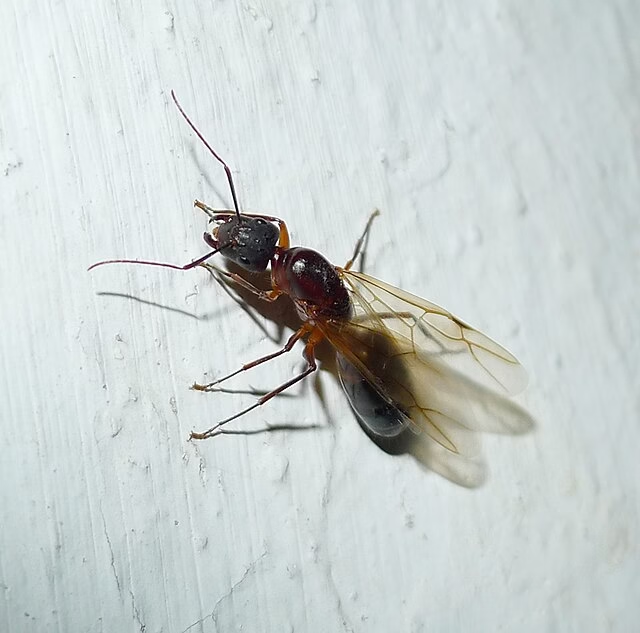
Queens are usually larger and bulkier than workers, with a bigger thorax because wing muscles used to be there. A dealate queen has shed her wings and may show wing scars. A winged queen can still be fertile, but a wingless queen found after a flight is usually the better candidate.
Useful signs:
- larger body than nearby workers
- big raised thorax
- wing scars or shed wings
- found after rain, humidity, storms or warm seasonal flight conditions
- walking alone rather than following a worker trail
If you are unsure, take a clear photo from above and side-on before disturbing her too much. Identification matters because founding care can differ between species.
Step 2: use a test tube setup, not a formicarium
For most beginner-friendly Australian queens, a test tube setup is the safest first home. It gives water, humidity, a small secure chamber and darkness without forcing the queen to search a giant empty nest.
- Fill about one-third of the tube with clean water.
- Push in a firm cotton plug so water cannot flood the dry chamber.
- Leave enough dry space for the queen to turn around.
- Close the entrance with breathable cotton.
- Cover the tube with foil, paper, cardboard or a sleeve.
- Place it somewhere stable and dark.
A formicarium comes later. Putting a single queen into a big nest is like moving into a shopping centre because you bought one couch. It looks impressive, but it is not helpful.
Step 3: know the difference between fully claustral and semi-claustral
This is one of the most useful beginner concepts in ant keeping.
| Founding type | What it means | Beginner care |
|---|---|---|
| Fully claustral | Queen raises first workers using stored body reserves. | Usually no food until workers arrive. Keep dark and quiet. |
| Semi-claustral | Queen needs to forage during founding. | Needs a tiny safe feeding area and careful small feeds. |
Many common beginner species, such as some Camponotus, are usually treated as fully claustral. Some species, especially certain stinging or more active ants, may be semi-claustral. If you are not sure, identify the queen before making big care decisions.
Should you feed her?
For a fully claustral queen, usually no. Feeding too early can cause more harm than good: sticky mess, mould, stress and extra disturbance. For a semi-claustral queen, yes — but with tiny, controlled amounts in a small outworld or feeding area.
If you do feed a queen because the species needs it, think tiny. A pinhead-sized protein piece or a very small sugar drop is plenty. You are feeding an ant queen, not catering a wedding.
Where to keep the tube
- Dark cupboard, drawer or shelf.
- No direct sunlight.
- No windowsill temperature swings.
- No speaker vibration.
- No curious pets or kids knocking it around.
- Stable room temperature is usually better than aggressive heating.
If using heat, heat only part of the setup and be careful. A small tube can overheat quickly. Direct sun through glass can cook a queen faster than most beginners expect.
How often should you check?
For most founding queens: once a week, briefly. That means a quick look for water, mould, eggs/brood and queen condition, then back into darkness.
Daily checking is one of the classic beginner mistakes. It feels like care, but to the queen it is basically living next door to a giant with a torch and no boundaries.
What to write on the label
- capture date
- suburb/region
- weather conditions
- winged or wingless
- suspected species/genus
- first eggs date
- first workers date
This makes future care easier and helps if you ask for ID or troubleshooting help. “Brownish queen from somewhere near my house a while ago” is not great data, even if spiritually honest.
Warning signs
| Problem | What to do |
|---|---|
| Flooding | Prepare a fresh tube and move carefully. |
| Water running out | Prepare a new tube before it dries completely. |
| Mould spreading near queen/brood | Offer a clean tube and reduce disturbance. |
| Queen pulling cotton constantly | Check heat, vibration, dryness or stress. |
| No eggs for a long time | Check ID, season, disturbance, mating status and conditions. |
What not to do
- Do not keep opening the tube for photos.
- Do not put her straight into a large formicarium.
- Do not feed fully claustral queens “just in case” every few days.
- Do not shake eggs/brood around trying to inspect them.
- Do not keep her in a hot car, windowsill or sunny spot.
- Do not mix queens unless you know the species and risks.
- Do not assume every queen uses the same founding strategy.
When first workers arrive
The first workers are called nanitics. They are often smaller and more delicate than later workers. Once they arrive, start tiny feeds: a small sugar source and tiny protein pieces. Keep the colony in the tube until it has enough workers to use a small outworld safely.
Do not rush the nest upgrade. The test tube is still doing its job.
If she is not laying eggs
If the tube looks safe but the queen still has no eggs after a few weeks, do not keep disturbing her. Work through the Queen Ant Not Laying Eggs checklist before moving, feeding or heating her.
If a newly captured queen becomes almost motionless, the queen ant not moving guide will help you decide whether to leave her alone, check hydration, or prepare a safer tube.
Related guides
- Test Tube Setup for Queen Ants
- Moving a Queen Ant to a New Test Tube
- Ant Feeding Guide
- Best Beginner Ant Species in Australia
- Formicarium Upgrade Guide
- Beginner Ant Keeping Mistakes
Bottom line
After catching a queen ant, your job is simple: confirm she is likely a queen, put her in a clean test tube setup, keep her dark and stable, identify the species as best you can, and stop fussing. Most beginner failures come from doing too much too soon.