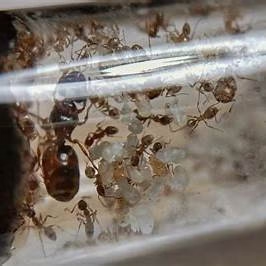
10 Beginner Ant Keeping Mistakes
The most common beginner ant keeping mistakes in Australia — and the practical fixes that keep queens, workers and colonies alive.
Most beginner ant keeping mistakes come from caring too loudly. Too much checking, too much food, too much space, too much heat, too much “I just wanted to see what would happen”. Ants usually do best when you set up the right conditions and then stop interfering every twelve minutes.
Quick answer
The biggest beginner mistakes are over-checking queens, feeding too much, moving colonies too early, using oversized nests, ignoring escape prevention, misidentifying species, overheating setups, leaving food to mould, skipping quarantine and treating all ants the same.
1. Checking the queen constantly
A founding queen needs darkness and stability. Daily checks can stress her, interrupt egg laying and lead to brood eating. Check briefly about once a week unless there is a genuine problem.
Fix: label the tube, set a weekly reminder, and let the queen do ant queen things in peace.
2. Feeding fully claustral queens too early
Many beginner-friendly queens do not need food before first workers. Extra food can mould, spill or stress the queen.
Fix: identify the species/founding type first. Feed semi-claustral queens carefully; leave fully claustral queens alone until workers arrive.
3. Moving into a formicarium too early
A huge nest looks exciting to humans but can be stressful and impractical for a tiny colony.
Fix: use test tube → small outworld → small nest. Upgrade when the colony needs it.
4. Overfeeding protein
Too much protein becomes mould, mites and smell. A young colony does not need a whole cricket banquet.
Fix: feed tiny portions and remove leftovers quickly.
5. Ignoring escape prevention
Ants are very good at finding the one gap you decided was probably fine.
Fix: use lids, barriers, tight tubing and secondary tubs during maintenance.
6. Misidentifying the species
Wrong ID can mean wrong founding method, wrong safety assumptions and wrong expectations. A “small black ant” is not a care plan.
Fix: take clear photos, record location/date and compare with local records or experienced keepers.
7. Heating dangerously
Heat can speed growth, but it can also cook a colony. Test tubes and small nests can overheat quickly.
Fix: avoid direct sun, heat only part of the setup, and use stable room conditions unless you know what you are doing.
8. Letting food rot
Old protein and spilled sugar feed mould, mites and bad smells.
Fix: use feeding trays/foil and remove leftovers within 24 hours or sooner in warm setups.
9. Skipping quarantine
New feeders, plants, soil, decor and colonies can bring mites or pests.
Fix: quarantine new material, inspect feeders and keep tools clean.
10. Treating all ants the same
Large slow Camponotus, tiny Pheidole, stinging Myrmecia and semi-claustral species do not all want the same care.
Fix: learn the species or genus before changing setup, feeding, heat or housing.
Quick troubleshooting table
| Symptom | Likely beginner cause | First fix |
|---|---|---|
| Queen eats eggs | Stress/over-checking | Darkness and fewer checks. |
| Mould in tube | Food or excess moisture | Remove food; prepare backup tube. |
| Workers escaping | Bad lid/barrier | Seal gaps and refresh barrier. |
| Colony ignores food | Wrong portion/type or no larvae | Offer smaller/fresher food. |
| Deaths after new feeders | Contamination/pesticide risk | Stop feeder source; quarantine. |
Related guides
- What to Do After Catching a Queen
- Ant Feeding Guide
- Formicarium Upgrade Guide
- Ant Barrier Guide
- Quarantine New Ants
- Best Beginner Ant Species
Bottom line
Good ant keeping is mostly patience, cleanliness and not upgrading because you got bored. Set up the basics properly, learn the species, feed small, check less, and let the ants be ants.