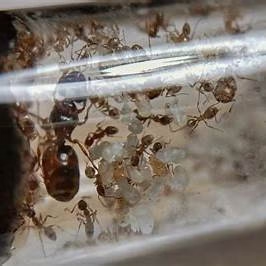
If you’ve just started ant keeping, congratulations — you’ve entered the oddly satisfying world where a dropped crumb can become a colony event. This guide covers the 10 most common beginner ant keeping mistakes and how to avoid them, with practical fixes, a quick troubleshooting checklist, and a few Australia-specific reality checks along the way.
Jump to the one-page troubleshooting checklist
1. Moving the Queen Too Much
Mistake: Constantly checking on the queen by shining lights into her test tube, shaking the setup, or moving her around.
Why it’s bad: Stress can cause a queen to stop laying, drop or eat eggs, or become inactive. Bright light, vibration and sudden temperature changes are real stressors during the founding stage.
How to avoid it:
- Check at most once a week during founding, and keep inspections short.
- Use a dim red headlamp or indirect room light for night-time checks; many ants have poor red-light perception.
- Keep the tube stable and away from loud appliances and direct sunlight.
Further reading: What to Do with a Queen Ant After Capture
2. Using the Wrong Test Tube Setup
Mistake: Using tiny or poor-quality tubes, or sealing them badly, and expecting them to last through founding.
Why it’s bad: Tubes can dry out or grow mould quickly. If the water reservoir fails, brood and queen can dehydrate.
How to avoid it — practical specs:
- Diameter: 16–20 mm is ideal for most small-to-medium queens; larger queens may need 24 mm+ or small jars.
- Length: 120–150 mm gives a good dark chamber plus room for a water reservoir.
- Water reservoir: about 10–20 mm of spring or dechlorinated water behind a cotton plug.
- Cotton: dense cotton to stop leaks but still allow humidity to wick.
Step-by-step: set up a reliable test tube with water
- Fill the tube about 12–20 mm from the plug end with spring or dechlorinated water.
- Pack dense cotton into the open end so the water does not leak, but humidity can still wick.
- Place a small dry folded tissue or cotton wad between the water plug and the queen’s chamber so she has a dry resting spot.
- Store the tube horizontally, with the cotton plug towards the light so the queen stays in the dark end.
When to replace a tube: If you see mould near the queen or brood, or the cotton is completely dry, prepare a new tube and transfer the colony using a non-intrusive connector method. Always keep at least one pre-prepared spare tube ready. For a full walkthrough, see Test Tube Setup for Queen Ants – The Perfect Step-by-Step Guide.
Safe transfer (non-intrusive):
- Prepare a fresh tube of similar diameter and length with water and a cotton plug, then leave it dark.
- Place the new tube touching the old tube’s opening, or use a short rolled paper connector so ants can walk between them.
- Leave the setup undisturbed for 12–48 hours; the colony usually moves voluntarily into the fresher tube.
- Once most ants and brood have transferred, seal and remove the old tube.
Always avoid forcing a transfer or using sudden bright light; let the ants relocate themselves whenever possible.
3. Forgetting a Water Source
Mistake: Assuming ants get all their moisture from food.
Why it’s bad: Brood development and worker vigour suffer without reliable water and humidity.
How to avoid it:
- Founding stage: the test-tube water reservoir is essential.
- Established colonies: provide a separate water station in the outworld, such as a small cap, mini liquid feeder, or wetted cotton behind a barrier.
- Humidity guidance (general ranges only — species vary):
- Camponotus (for example Banded Sugar Ant): moderate humidity, around 50–70%, and 18–26°C.
- Pheidole spp.: drier to moderate humidity, around 40–60%, and 22–28°C.
- Ochetellus glaber: moderate, around 40–60% RH and 20–26°C.
- Polyrhachis (humidity lovers): around 60–90% RH and 20–25°C.
Watch the ants rather than the numbers alone. If they crowd the cotton plug, they may want more moisture; if mould appears, humidity is too high or ventilation is too poor. For broader seasonal context, Seasonal Temperature & Humidity Management for Ant Keepers in Australia is worth a look.
Further reading: The Ultimate Ant Feeding Guide
4. Choosing the Wrong Ant Species
Mistake: Picking a spectacular or large species without checking care difficulty.
Why it’s bad: Some species are specialised, slow to develop, escape-prone, or require permits.
Beginner-friendly species (general notes):
- Banded Sugar Ant (Camponotus consobrinus) — easy-going, tolerant of normal room temperatures, and a good lesson in patience.
- Big-Headed Ant (Pheidole antipodum) — fast brood production and great for learning colony growth.
- Black Household Ant (Ochetellus glaber) — active, resilient and usually happy in household conditions.
Harder species to avoid as a beginner: Myrmecia (bull ants) are powerful stingers with stronger escape and chewing behaviours; Polyrhachis often need higher humidity and more specialised nests.
Australian legal and ethical note: Before collecting, check your state or territory wildlife agency for permit requirements and protected-area rules. Don’t collect from national parks, avoid taking large numbers of queens, and respect local biodiversity. If unsure, photograph and record the find first and consult local resources. For species identification and distribution notes, the Atlas of Living Australia is a useful reference point.
Further reading: Best Australian Ant Species for Beginners
5. Overfeeding or Underfeeding the Colony
Mistake: Leaving too much food to rot, or giving too little protein and slowing brood growth.
Why it’s bad: Leftover food leads to mould and mites; lack of protein reduces worker quality and colony growth.
How to avoid it:
- Offer small, measured portions and increase only if they clear it quickly.
- Remove uneaten food within 24 hours to prevent mould and scavengers.
- Provide protein regularly for larvae and sugar sources for workers, such as pre-killed insects, boiled egg, or specialised ant foods.
Young founding queens may not want food for days, so observe before offering much.
Further reading: The Ultimate Ant Feeding Guide
6. Ignoring Escape Prevention
Mistake: Assuming ants won’t try to escape from a seemingly content colony.
Why it’s bad: Even the happiest ants explore. Escapes are stressful to the colony and inconvenient for you.
How to avoid it:
- Use PTFE (fluon) or talcum barriers on outworld walls.
- Ensure lids fit tightly and ventilation holes have appropriate mesh.
- Avoid soft plastics for escape-prone species, as some ants can chew thin materials.
Further reading: Ant Escape-Proofing 101
7. Rushing the Move to a Formicarium
Mistake: Moving ants into a large nest too soon.
Why it’s bad: Large empty spaces cause stress, increase mould risk, and make brood management harder for a tiny founding colony.
How to avoid it:
- Keep founding queens in test tubes until they have roughly 30–50 workers, as a general guide.
- When upgrading, choose a snug initial formicarium and expand as the colony grows.
Further reading: Moving Your Queen Ant from the Founding Stage to a Formicarium and Upgrading Your Ant Colony’s Formicarium – When & How to Do It Right
8. Using the Wrong Nest Type
Mistake: Choosing a nest that doesn’t suit the species’ humidity, temperature or chewing habits.
Why it’s bad: Wrong materials or layout can cause stress, overheating, mould, or escapes.
Which nest types suit which genera (general guidance):
- Acrylic or 3D-printed nests: versatile and easy to clean — good for Camponotus, Pheidole and Ochetellus.
- Ytong or plaster nests: hold moisture well — ideal for humidity-loving ants such as Polyrhachis.
- Naturalistic setups: best for meat ants and some Myrmecia, but they need careful ventilation and monitoring.
Choosing the right nest is much easier when the colony’s humidity and temperature needs are clear. For a broader overview of nest styles, see Ant Nests 101: Choosing the Best Formicarium for Your Colony.
9. Not Keeping the Nest Clean
Mistake: Assuming ants will manage all hygiene by themselves.
Why it’s bad: Waste and old food attract mites, mould and bacteria that can harm the colony.
How to avoid it:
- Remove dead ants and uneaten food regularly, especially in outworlds.
- If the colony doesn’t establish a refuse area, remove waste carefully yourself.
- For test tubes, move the colony if persistent mould appears near the brood or queen.
Further reading: Recognising and Responding to Mould and Fungal Outbreaks in Your Formicarium and Preventing Mites
10. Panicking Over Normal Behaviour
Mistake: Mistaking normal species-specific behaviour for a crisis.
Reality check (common behaviours):
- Workers standing still: some species rest in groups or remain motionless when disturbed.
- Ignoring food: the colony may be satiated, or the queen may not want food during early founding.
- Queen not laying immediately: founding queens can take days to weeks to start laying as they recover from the nuptial flight.
Pro tip: Observe for 24–48 hours before assuming disaster. Check the basics — water, temperature and any signs of mould or pests — and compare behaviour with species-specific notes.
Final Thoughts: Learn From the Mistakes
Everyone makes mistakes, but now you can avoid the most common beginner ant keeping mistakes and keep your colony healthy, productive and escape-proof. Small adjustments — better humidity control, a solid test-tube setup, the right species, the right nest — pay big dividends.
Quick Starter Checklist
- Pre-prepared spare test tube with water and cotton.
- At least one small, snug formicarium or nest ready for upgrading later.
- Mini feeders for sugar and a small supply of pre-killed protein, such as mealworms or crickets.
- PTFE barrier for outworlds and a tight-fitting lid.
- Thermometer and hygrometer to monitor room conditions.
- Check your state or territory permit requirements before collecting, including any rules for protected areas.
One-Page Troubleshooting Checklist
- Colony inactive: check water, temperature and light exposure; leave undisturbed for 24–48 hours.
- Queen not laying: minimise disturbance, ensure hydration and correct temperature for the species; allow time.
- Mould in tube: prepare a fresh tube and perform a non-intrusive transfer using a connector; reduce excess humidity and improve ventilation.
- Escapes: inspect barriers and lids, check for chew damage, follow escapee trails to the breach and patch it.
- Brood dying: check for dehydration, mould and pests; ensure adequate protein for larvae and remove contaminated substrate.
- Pests (mites, silverfish): quarantine the affected setup, remove visible pests and review hygiene and feeding.
Ant keeping rewards curiosity and patience, and most mishaps are fixable with a little knowledge and time.
Useful reference: Atlas of Living Australia for species ID and distribution — https://bie.ala.org.au/