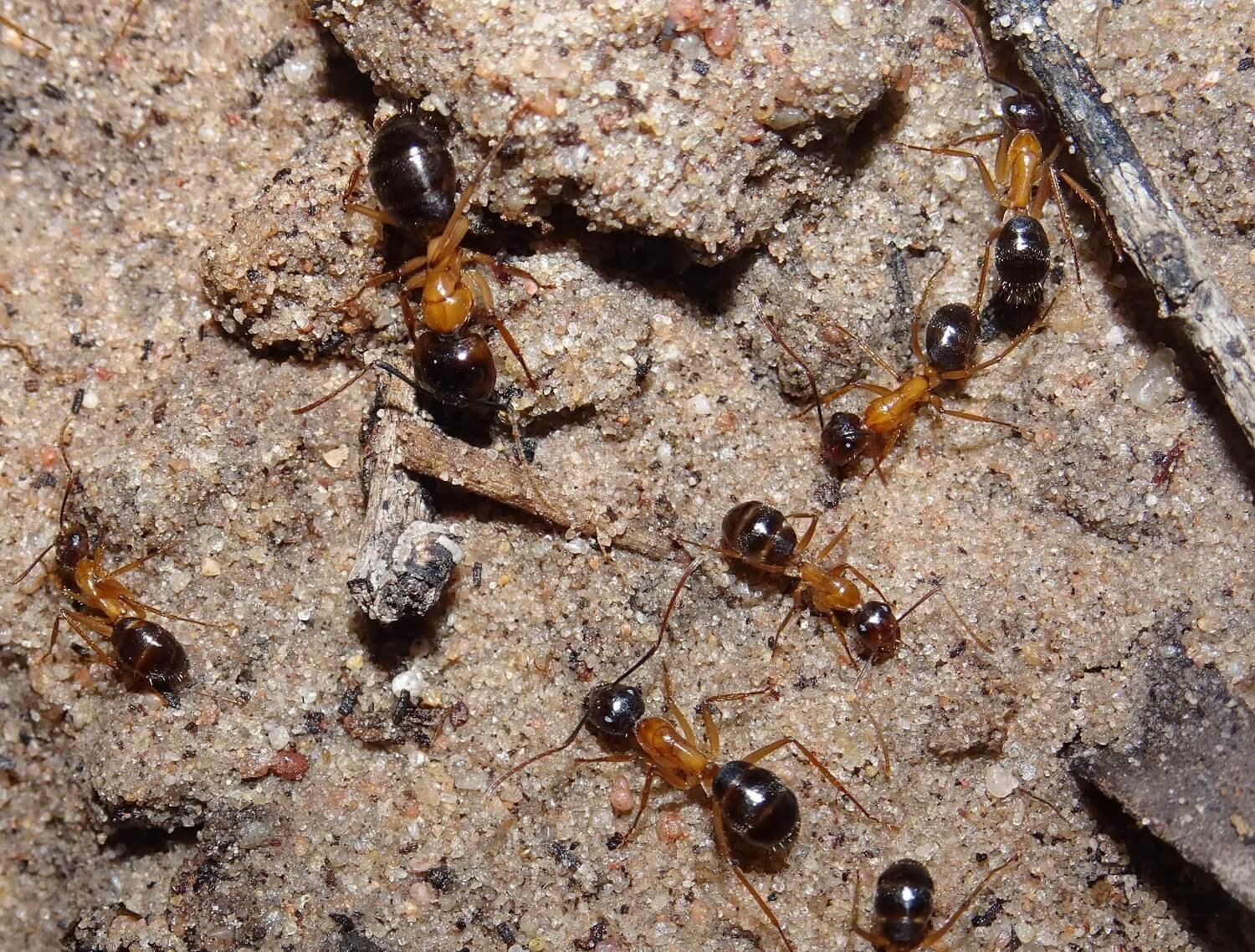
Best Australian Ant Species for Beginners

Starting your ant-keeping journey but not sure which species to pick? This guide covers the best beginner ant species Australia has to offer—hardy, easy to feed, and perfect for new keepers. Not all ants are created equal—some are hardy, beginner‑friendly, and thrive in captivity, while others require specialised setups and advanced care.

If you’re a beginner, you’ll want an active, adaptable species that’s easy to feed, doesn’t require extreme humidity control, and won’t escape at every opportunity. No matter which you choose, these are the best beginner ant species Australia has for starting your first colony.

This guide covers the top beginner species, their care requirements, and what makes them great for new ant keepers — plus the important practical and legal bits many beginners miss.


Responsible keeping, legal & biosecurity (please read first)

  • Sourcing: Only collect or buy queens from your local area or from reputable Australian breeders. Never buy or keep non‑native ant species—releasing non‑native ants risks serious ecological harm.
  • Permits and laws: Regulations vary by state/territory and sometimes by species. Check your state environment or agriculture department before collecting or keeping native wildlife. If in doubt, contact your local council or state department. Useful national resources: CSIRO and the Australian Government biosecurity pages (https://www.agriculture.gov.au/biosecurity).
  • Don’t release ants: Never release captive ants into the wild. Even native species relocated outside their natural range can cause problems. Rehome within the same local area or humanely euthanase if you cannot keep them.
  • Avoid invasive species: Learn which ants are considered pests in your area. If you suspect an exotic or pest species, contact your local biosecurity authority rather than trying to keep them.
  • Ethics: Collect queens only during or immediately after nuptial flight season, and avoid taking queens from wild colonies that would be heavily impacted by removal.

Founding & queen care — claustral vs semi‑claustral

Understanding how a queen founds a colony is one of the most important beginner topics.

Claustral queens: Seal themselves into a test tube or nest chamber and raise the first brood using stored fat and wing muscle reserves. No feeding is required during the founding period (although some keepers offer water). Claustral queens are generally easier for beginners because they don’t need regular feeding and are less exposed to risks.

Semi‑claustral queens: Need to leave the nest to forage to feed themselves and the larvae during founding. This requires a safer, more secure setup and hands‑on feeding (live or pre‑killed insects). Semi‑claustral founders are more work and carry a higher risk of escapes or predation; they are not ideal for absolute beginners.

General founding tips:

  • Start queens in a simple test‑tube setup for claustral species (dark, humid, with cotton plug). Keep the tube in a quiet, stable place.
  • Keep temperature and humidity stable for the founding queen (see species ranges below).
  • Only disturb the founder if necessary; many failures come from too much handling or movement.
  • For semi‑claustral queens (e.g. most Myrmecia), provide a small, escape‑proof arena and frequent small protein feeds until workers take over.

1. Banded Sugar Ant (Camponotus consobrinus)

Why they’re great for beginners:

  • Large, slow‑moving and easy to observe.
  • Typically claustral queens — good for test‑tube founding.
  • Tolerant of a range of temperatures and humidity.
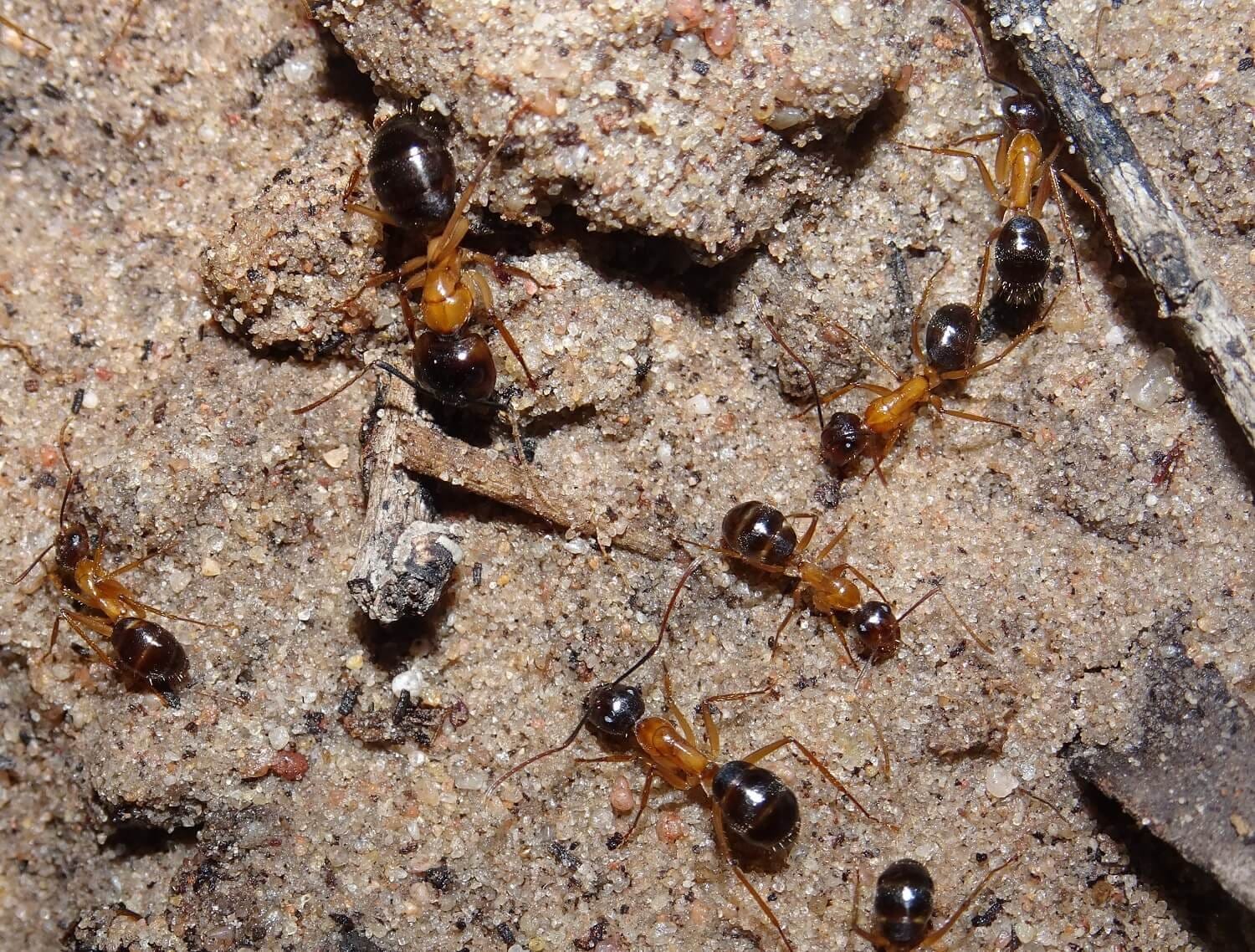
A colony of Banded Sugar Ants (*Camponotus consobrinus*) inside their nest, tending to eggs, larvae, and pupae.
Banded Sugar Ant (*Camponotus consobrinus*) workers caring for their brood inside the nest, organising eggs, larvae and pupae.

Care needs (recommended ranges)

  • Founding: Claustral — test tube setup recommended.
  • Temperature: 20–26°C for general care; slightly cooler (12–16°C) if you plan to provide a winter diapause for mature colonies.
  • Humidity: Moderate — 50–70% in nest area.
  • Nest type: Acrylic, 3D‑printed, test tube for founders.
  • Diet: Sugars (honey water, nectar, fruit) + protein (small insects) for brood growth.
  • Colony growth: Slow — good for hobbyists who prefer a calm colony.

🚀 Fun fact: These ants often forage at night, so they’re great in low‑light setups.

Learn more: Banded Sugar Ant care guide


2. Big‑Headed Ant (Pheidole sp.)

Why they’re great for beginners:

  • Fast‑growing colonies and lots of behavioural variety (majors and minors).
  • Hardy and adaptable.
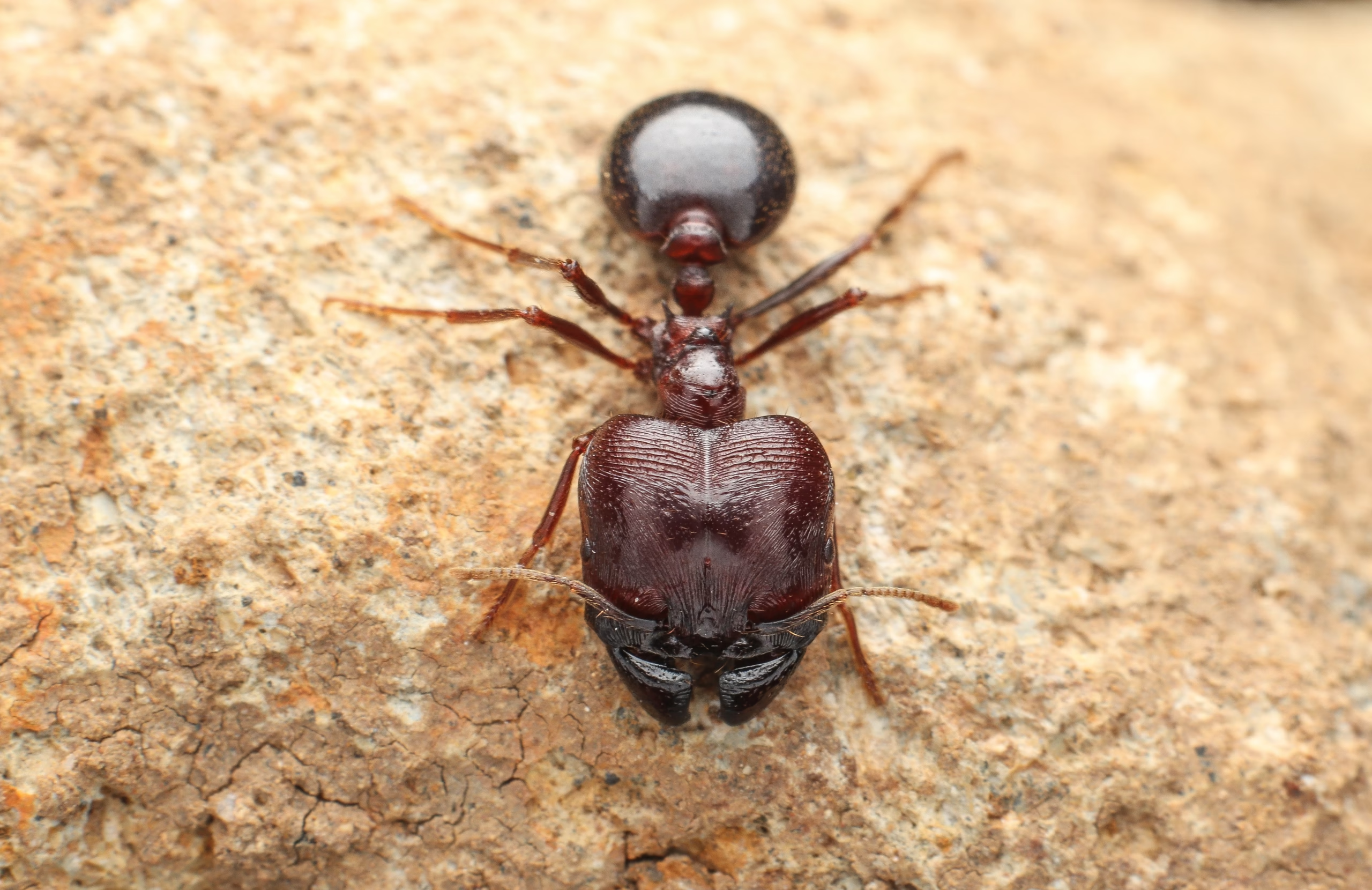
A close-up of a Big-Headed Ant (Pheidole sp.), highlighting its large major worker head and segmented body on a rocky surface.
A Big‑Headed Ant (Pheidole sp.) major worker showcasing its oversized head and powerful mandibles.

Care needs (recommended ranges)

  • Founding: Many Pheidole are claustral; test tube founding usually works.
  • Temperature: 22–28°C.
  • Humidity: Moderate — 45–65%.
  • Nest type: Acrylic or 3D‑printed nests.
  • Diet: Omnivore — sugars and protein (insects, seeds, egg yolk).
  • Colony growth: Fast — expect hundreds of workers within months under good conditions.

🚀 Fun fact: Majors use their oversized heads and mandibles to process hard foods like seeds.

Learn more: Big‑Headed Ant care guide


3. Meat Ant (Iridomyrmex purpureus)

Why they’re great for beginners who want action:

  • Extremely active and entertaining to watch.
  • Hardy and easy to feed.
A group of Meat Ants (*Iridomyrmex purpureus*) near their nest entrance, actively foraging on a gravelly surface.
Meat Ants (*Iridomyrmex purpureus*) working near their nest entrance, showcasing their dark reddish bodies and organised foraging behaviour.

Care needs (recommended ranges)

  • Founding: Many Iridomyrmex are claustral but can be aggressive foragers once workers emerge.
  • Temperature: 24–30°C — they prefer warmer conditions.
  • Humidity: Nest chambers often kept quite humid — aim for 60–80% in the nest (surface can be drier).
  • Nest type: Ytong/plaster or naturalistic setups with secure lids; provide deep substrate.
  • Diet: Generalist — sugars, nectar and plenty of protein.
  • Colony growth: Medium to fast; can become very large.

🚀 Warning: These ants can be aggressive and are strong — make sure your setup is escape‑proof. They can pry at weak seals and are persistent foragers.

Learn more: Meat Ant care guide


4. Black House Ant (Ochetellus glaber)

Why they’re great for beginners:

  • Super easy to keep and tolerant of urban conditions.
  • Fast‑growing colonies and thriving in small setups.
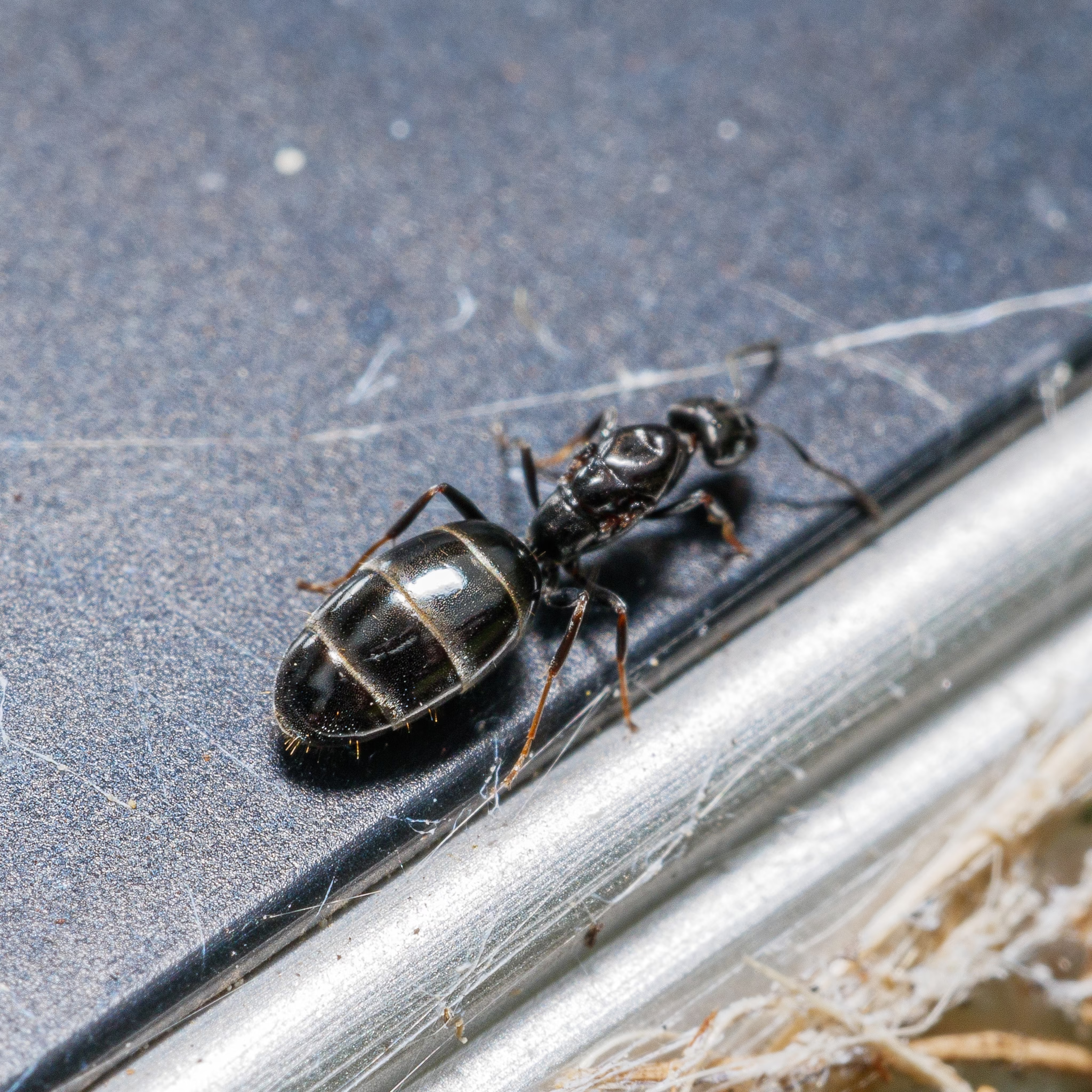
A close-up of an Ochetellus glaber queen, also known as the Black Household Ant queen, displaying her shiny black exoskeleton and distinctive body shape.
An Ochetellus glaber queen exploring a metallic surface, highlighting her glossy black body and larger size compared to workers.

Care needs (recommended ranges)

  • Founding: Many are claustral — test tubes work fine.
  • Temperature: 20–28°C.
  • Humidity: 40–60% — they tolerate lower humidity than some species.
  • Nest type: Acrylic, 3D‑printed or test tube.
  • Diet: Sugars and protein; very opportunistic.
  • Colony growth: Fast — expect visible worker increases quickly.

🚀 Fun fact: If you’ve seen lines of ants in your kitchen, these blokes might have been the culprits.

Learn more: Black House Ant care guide


5. Golden Spiny Ant (Polyrhachis ammon)

Why they’re great for beginners who want something pretty:

  • Striking golden colour and interesting defensive spines.
  • Arboreal — good in vertical setups.
  • Slow‑growing and easy to manage size‑wise.
A Golden Spiny Ant (*Polyrhachis ammon*) on sandy terrain, showcasing its distinctive golden abdomen and spiny thorax.
A Golden Spiny Ant (*Polyrhachis ammon*) navigating a sandy habitat, highlighting its golden abdomen and unique spiny body structure.

Care needs (recommended ranges)

  • Founding: Often claustral; provide a vertical or arboreal nest area.
  • Temperature: 20–26°C.
  • Humidity: 60–80% — they appreciate higher humidity because they are arboreal in nature.
  • Nest type: Vertical acrylic or climbing frames.
  • Diet: Sugars and insects.
  • Colony growth: Slow — manageable and display‑friendly.

🚀 Fun fact: Rather than rely on huge jaws, these ants have sharp spines for defence.

Learn more: Golden Spiny Ant care guide


6. Bull Ant (Myrmecia sp.) — advanced beginner

Why they’re unique:

  • Huge, impressive ants; dramatic display colonies.
  • Most species are semi‑claustral, meaning the queen must be fed during founding.
  • Very slow colony growth but spectacular adults.
A close-up of a Jack Jumper Ant (*Myrmecia pilosula*) perched on a twig, showcasing its distinctive long mandibles and powerful legs.
A Jack Jumper Ant (*Myrmecia pilosula*) on a twig, highlighting its aggressive stance, long mandibles and fast movements.

Care needs (recommended ranges)

  • Founding: Semi‑claustral — queen requires regular feeding during founding (small insects, honey drops).
  • Temperature: 18–26°C (species dependent); avoid extreme heat.
  • Humidity: 40–60% — many Myrmecia prefer drier nests with deep substrate to dig into.
  • Nest type: Large, naturalistic setups with deep soil/sand layers.
  • Diet: Adults favour sugars and nectar; larvae need protein (live or pre‑killed insects).
  • Colony growth: Very slow — expect a few workers per year initially.

🚨 Serious safety note: Many Myrmecia (including Jack Jumpers) have powerful stings. Their venom can cause severe allergic reactions, including anaphylaxis in susceptible people. If you have a known insect‑sting allergy, do not keep Myrmecia. Always have a first‑aid plan: clean the sting site, apply a cold pack, take antihistamines for mild reactions, and seek urgent medical attention for breathing, swelling of the face/throat, dizziness or fainting. If you are allergic and prescribed an EpiPen, follow your medical plan immediately.

🚨 Not recommended for complete beginners. Semi‑claustral founding and powerful stings make them an advanced hobby choice.

Learn more: Golden Tail Bull Ant care guide, Jumping Jack care guide


Quick reference table — at a glance

Species Founding Temp (°C) Humidity Nest type Hibernation
Banded Sugar Ant (Camponotus consobrinus) Claustral 20–26 50–70% Acrylic/3D/Test tube Yes (cooler)
Big‑Headed Ant (Pheidole) Claustral (often) 22–28 45–65% Acrylic/3D No (slows in winter)
Meat Ant (Iridomyrmex purpureus) Claustral 24–30 60–80% Ytong/plaster/naturalistic No
Black House Ant (Ochetellus glaber) Claustral 20–28 40–60% Acrylic/3D/Test tube No (slows)
Golden Spiny Ant (Polyrhachis ammon) Claustral 20–26 60–80% Vertical/acrylic Yes (slower)
Bull Ant (Myrmecia) Semi‑claustral 18–26 40–60% Naturalistic (deep soil) No

Escape‑proofing & pest management

Escape‑proofing

  • Seal all gaps: ants exploit millimetre‑sized holes. Use silicone sealant on joins and check lids for gaps.
  • Fluon (PTFE) or similar non‑stick coatings on walls and lids work well — reapply periodically.
  • Use oil moats or water moats for external feeding platforms and equipment.
  • Double‑containment: keep experimental arenas inside a larger tub to catch escapees if a single barrier fails.
  • Test your setup with a few workers before moving a full colony or the queen into a new enclosure.

Pest management

  • Quarantine new queens/colonies for at least a week; inspect for mites, springtails or phorid flies.
  • Keep feeding areas clean and remove uneaten food to reduce fruit flies and mould.
  • If mites or springtails appear in large numbers, temporarily isolate the nest, manually remove visible pests, and consider replacing substrate after freezing it for 48–72h to kill hitchhikers (safe for substrate items only).
  • Avoid pesticides — they will kill ants and can contaminate the colony. Mechanical removal and hygiene are best.
  • Regularly inspect formicaria and equipment for signs of invasion; sticky barriers around stands can catch crawling pests.

Seasonal care and diapause (hibernation)

Many Australian ants reduce activity in winter (diapause) while others remain active year‑round. If you plan to provide a diapause to mimic wild cycles:

  • Gradually reduce temperature over 1–2 weeks to target winter temps (often 8–15°C for species that hibernate). Sudden changes can shock the colony.
  • Reduce feeding and day length gradually—don’t starve the colony: a small amount of food occasionally is fine.
  • Keep humidity stable to prevent mould — cooler air holds less moisture so check nest hydration.
  • Not all species should be forced into diapause — check the species’ natural history. Meat ants and many Myrmecia remain active year‑round in warm climates.

State & region notes (short)

  • Eastern & southern Australia: Camponotus, Pheidole, Myrmecia and Polyrhachis species are common depending on habitat.
  • Urban areas: Ochetellus (Black House Ant) and other opportunists are frequently found.
  • Inland and warmer regions: Iridomyrmex (Meat Ant) is common and tolerates heat.
  • Always choose species native to your local area — consult local field guides, CSIRO resources and state environment departments for details.

Helpful links and further reading

  • CSIRO (general Australian insect and biodiversity resources): https://www.csiro.au/
  • Australian Government biosecurity and pest pages: https://www.agriculture.gov.au/biosecurity
  • Check your state/territory environment or agriculture department for permits and regulations (search “keeping native animals [your state]” or contact them directly).
  • AntKeepingAustralia species guides and care pages: see the species links in this article.

FAQ & troubleshooting

Q: My queen isn’t laying eggs — what now?

A: Give her time (some queens take weeks to start). Ensure proper temperature/humidity, darkness, minimal disturbance and that the queen is indeed mated (unmated queens often shed wings but won’t produce female workers). If she’s been disturbed or moved recently, allow a quiet recovery period.

Q: Brood is dying — are my feeding or humidity levels wrong?

A: Check for mould, improper humidity (too high or too low), or lack of protein for larvae. Avoid over‑feeding and keep the nest area clean. If you used wild substrate, consider replacing it after quarantine and sterilisation.

Q: Ants keep escaping — help!

A: Check seals for gaps, reapply fluon on walls/lid undersides, use oil or water moats, and test with a few workers before transferring a whole colony. Ensure tubing/passes to external feeders are anti‑escape (narrow, coated, or with barriers).

Q: I was stung — what should I do?

A: For minor sting reactions: wash the area, apply a cold pack and take an antihistamine if needed. For signs of severe allergic reaction (difficulty breathing, swelling of face/throat, dizziness, collapse), call emergency services immediately. If you have a known allergy and carry an EpiPen, use it and seek urgent medical help.


Conclusion

If you’re just starting out, Banded Sugar Ants or Big‑Headed Ants are excellent choices for their ease of care and resilience. Meat Ants and Black House Ants are great if you want a more active, fast‑growing colony. Golden Spiny Ants are visually striking and manageable, while Bull Ants are spectacular but definitely an advanced‑beginner project (and a safety consideration).

Whatever species you choose, research their needs thoroughly, follow biosecurity and legal guidance, and enjoy the fascinating world of ant keeping. Australia is home to over 1,300 known ant species — there’s plenty to learn and explore (see CSIRO).

Learn more about test tube setups here, and check out The Ultimate Ant Feeding Guide for feeding and nutrition tips.

Leave a Comment

Your email address will not be published. Required fields are marked *