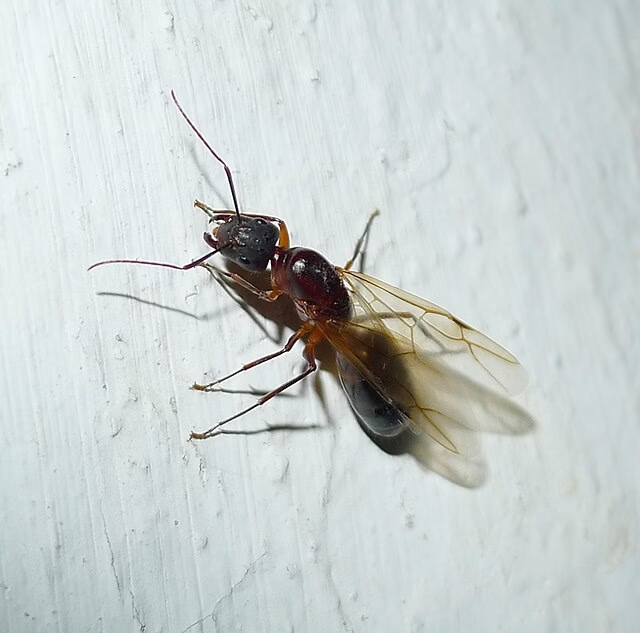
Queen Ant Flight Season in Australia
When queen ants usually fly, which weather signs matter, and what Australian beginners should do after a nuptial flight.
Queen ant flight season in Australia is not one fixed date. Most beginner-friendly queen hunting happens through the warmer months, especially after warm rain, storms or humid evenings, but the exact window changes by species, region and year.
This guide is the weather-and-season companion to How to Find Queen Ants in Australia. Use it to decide when to look, when to leave ants alone, and what to prepare before you find a queen.
Quick answer: when do queen ants fly in Australia?
In much of Australia, the best beginner window is spring through early autumn. Warm, humid weather after rain is the classic trigger. Some species fly earlier, later, at night, during the day, or after very specific local weather patterns, so treat any calendar as a guide, not a guarantee.
| Signal | Good sign | Beginner note |
|---|---|---|
| Rain | Recent rain, storms or damp ground | Check paths, lights and open ground once conditions settle. |
| Temperature | Warm day or warm evening for your area | Sudden warmth after cooler weather can wake up activity. |
| Humidity | Sticky, humid air | Humidity helps queens avoid drying out after leaving the nest. |
| Wind | Calm to light wind | Strong wind usually makes flights less likely or harder to spot. |
| Ant activity | Winged ants, males, workers crowding nest entrances | A busy nest is a better clue than the calendar alone. |
Australian season guide
Australia is too big for one neat flight chart. A humid night in Brisbane, a dry-hot day in inland NSW and a cool Tasmanian evening are very different conditions. The safest beginner approach is to watch local weather and local ant activity together.
| Season | What to expect | Best beginner action |
|---|---|---|
| Winter | Fewer flights in many southern areas; some ants slow down. | Prepare tubes, learn local species, avoid disturbing nests. |
| Spring | Activity lifts as warmth and rain return. | Start checking after warm rain and humid evenings. |
| Summer | Peak hunting period for many beginners. | Carry collection tubes and check lights/paths after storms. |
| Autumn | Still useful for some species and regions. | Look after warm, humid weather, especially after rain. |
Where to check after flights
- Footpaths and driveways: queens often walk across open surfaces after landing.
- Street lights and porch lights: winged ants and males can be drawn to light at night.
- Garden edges: queens may search along soil cracks, rocks, mulch edges and retaining walls.
- Near known nests: watch from a respectful distance; do not dig up or damage the nest.
- After storms: check once rain eases and it is safe to be outside.
What to prepare before queen season
- Clean collection tubes or small ventilated containers.
- A few ready-made test tube setups for queen ants.
- A notebook or phone note for date, suburb/region, weather and where the queen was found.
- A calm plan for the first 24 hours: dark, quiet, secure and no unnecessary feeding.
- A species comparison list from the best beginner ant species in Australia guide.
Do winged queens count?
Sometimes, yes. A queen may keep her wings for a while after mating, and wing loss alone does not prove whether she is mated. Do not squash or discard a queen just because she still has wings. Put her in a secure setup, keep notes, and give her time unless you are confident she is only an unmated alate.
What not to do during nuptial flights
- Do not dig up wild nests. Collect wandering queens, not established colonies.
- Do not collect every queen you see. Take only what you can house properly.
- Do not rely on exact species ID from a blurry photo. Use conservative genus/group care until you know more.
- Do not overfeed a fresh queen. Many fully claustral queens need quiet more than food.
- Do not move ants between regions. Keep local biosecurity and legal common sense front and centre.
After you catch a queen
Get her into a secure founding setup, record where and when she was found, and avoid constant checking. Then use What to Do with a Queen Ant After Capture for the first-day routine.
FAQ
What time of day do queen ants fly?
Some fly during warm daylight, others at dusk or night. If you are new, check after warm rain in the evening and again the next morning on footpaths, driveways and garden edges.
Can queen ants fly in winter in Australia?
It can happen for some ants in some regions, but winter is not the main beginner queen hunting window in many southern areas. Use winter to prepare equipment and learn local species.
Is rain enough to trigger a nuptial flight?
Rain helps, but it is not the only trigger. Warmth, humidity, light wind, season, species biology and local nest readiness all matter.
Should I feed a queen immediately after catching her?
Usually, no. First priority is a secure, calm setup. Feeding depends on whether the queen is fully claustral or semi-claustral, which is why conservative ID matters.