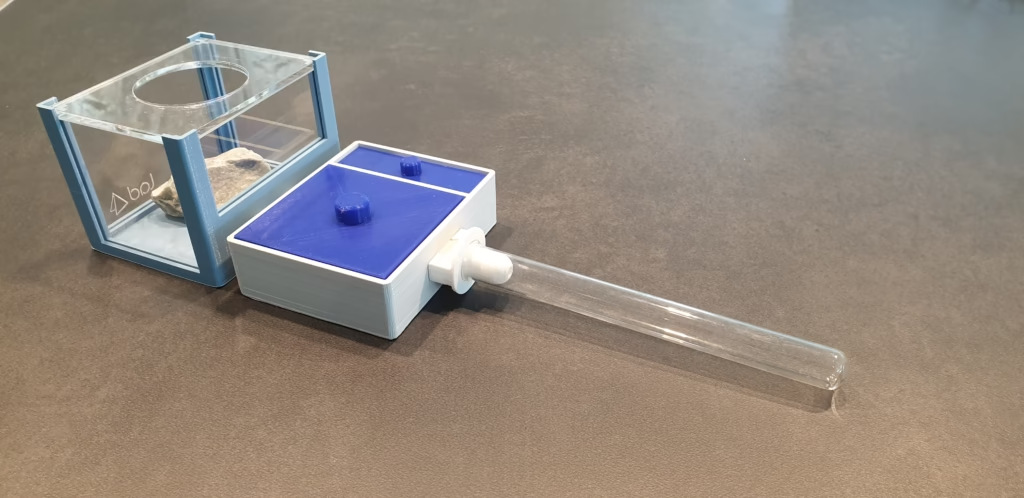
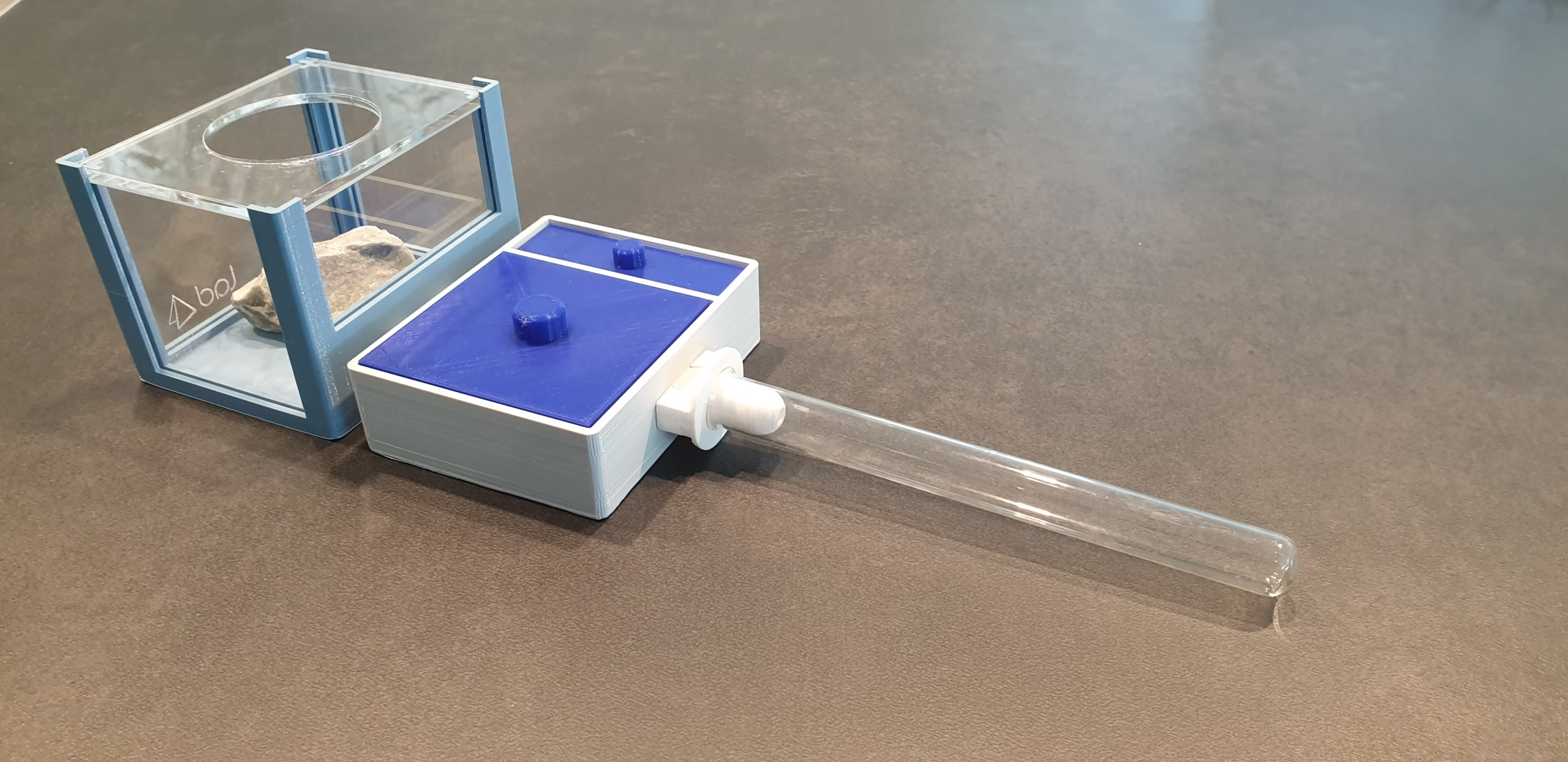
Your queen has raised her first workers — congratulations! Moving your queen ant to a formicarium is a big milestone: do it carefully and the colony settles quickly; rush it and you risk stress, brood loss or escapes. This guide explains when to move, how to prepare the nest, two low-stress transfer methods, an emergency transfer protocol, troubleshooting and an on-page checklist to keep beside you during the move.
When to move your queen ant to a formicarium
Timing matters. A small founding colony often benefits from the security of a test tube, while a colony that’s cramped or running low on water needs a new home. The phrase “move your queen ant to a formicarium” is what this guide helps you do safely and with minimal stress.
Signs they’re ready:
- Test tube overcrowded — workers stacked on brood with little room to move.
- Water running low — condensation gone, cotton dry or reservoir empty.
- Increased foraging — workers exploring the outworld regularly.
General rule: don’t rush. Many species perform better in a snug, dark test tube until they have a sensible worker force.
Species-aware worker thresholds (practical hobbyist guidance)
These are starting points for common Australian taxa. Behaviour and brood load matter more than raw numbers.
- Camponotus (e.g. Banded Sugar Ant, Camponotus consobrinus) — aim for ~10–25 workers before moving; link: Banded Sugar Ant care.
- Pheidole (big-headed ants) — target 20+ workers so minor/major castes and brood have room; see Big-Headed Ant care.
- Iridomyrmex (meat ants and similar) — 30–50+ workers recommended for active foragers; see Meat Ant care.
- Myrmecia (bull ants) — 10–15+ workers and only for experienced keepers; these digging species need naturalistic nests (see Jumping Jack ant care as an example).
- Small formicines and similar small taxa — many do best after ~20 workers; adjust for behaviour.
These thresholds are conservative. If the test tube is drying or the colony is in immediate danger, prepare an emergency transfer (see Emergency transfer protocol).
Choosing the right formicarium
Pick nest material and size based on species, humidity needs and how much observation you want. Make the nest appropriately snug for a small colony — too-large open chambers stress young colonies.
Acrylic & 3D-printed nests
- Good for many Camponotus and small species. Easy to clean and modular.
- Suggested internal volume: for 20–50 workers choose ~200–800 mL; for larger colonies 1 L+.
Ytong (aerated concrete) / plaster
- Excellent moisture retention for species that prefer higher humidity. Hydrate gently from a reservoir or damp sponge.
- Seal crumbly edges and avoid puddles — mould risk increases with standing water.
Naturalistic soil/sand nests
- Best for Myrmecia and digging species. Use pathogen-free, sieved substrate and consider an observation layer so you can check brood without disturbing deep chambers.
Pro tip: close down excess chambers for young colonies with removable baffles (cotton, cardboard or 3D-printed inserts). Ants prefer snug, secure chambers — expand space only as the colony shows consistent activity.
For a deeper read on nest types and choosing the best formicarium, see: Ant Nests 101: Choosing the Best Formicarium for Your Colony.
Setting up the formicarium — checklist before the move
Prepare the new nest so the test tube can be introduced without delay.
- Hydration: fill reservoirs and check humidity. For hygrophilic species aim for visible condensation (not puddles).
- Temperature: set ambient to your species’ preferred range (see Temperature, humidity and hibernation).
- Block off excess space: use removable barriers to keep the available nest volume appropriate for the colony size.
- Outworld: attach or create a small foraging arena with escape prevention (fluon on walls, moat or sealing tape).
- Feeding station: position a small sugar feeder and a protein dish in the outworld — familiar food reduces stress.
- Light conditions: ensure the new nest is darker than the test tube entrance if you plan a passive move.
If you need a reminder on correct test-tube setup before the move, see: Test Tube Setup for Queen Ants.
Moving your queen ant to a formicarium: step-by-step methods
Two low-stress approaches: Passive (preferred) and Gentle Nudge. Use passive whenever possible — it keeps stress and accidental injury to a minimum.
Method A — Passive method (least stressful)
- Position the test tube: place the test tube with the cotton plug flush at the formicarium entrance so ants can walk straight in. Line up tube exit and entrance tunnel where possible.

- Make the new nest appealing: darken the nest (cover with a towel), make it slightly more humid and a few degrees warmer than the tube, and add a small familiar sugar drop in the outworld.
- Reduce disturbance: leave the setup somewhere quiet. Check gently twice daily; don’t prod the tube.
- Be patient: relocation can start within hours or take several days; full moves often take a week if there’s lots of brood.
Expected timeline: many colonies begin moving in 12–72 hours; a full relocation depends on brood amount and species.
Method B — Gentle nudge (when passive fails)
Use this only if the colony refuses to move despite the new nest being demonstrably better.
- Darken the test tube: shine room light or an indirect lamp on the tube to encourage ants toward the darker nest. Avoid heating the tube.
- Make the new nest more attractive: add a damp sponge in a hydration chamber and a warm microclimate.
- Cool the test tube slightly: a cloth-wrapped cool pack for a short time can help; monitor temperatures carefully.
- Gentle coaxing: lightly tap the back of the test tube or use a soft paintbrush to nudge workers — never shake or invert the tube.
- Manual transfer as last resort: if you must move individuals, do it slowly with a soft brush at low light and transfer brood into a prepared moist test tube.

Warning: do not tip or dump the test tube unless performing an emergency transfer. Rough handling injures queens and brood and provokes panic relocations.
Feeding & watering after the move
Once the colony has access to the outworld, keep food and water consistent to encourage settling.
- Water: keep a constant source — a test tube with cotton in the outworld or a hydration chamber inside the formicarium. Refill before condensation disappears.
- Sugars: honey or sugar water drops on foil or in a small feeder. Use small amounts to reduce drowning and mould risk.
- Protein: small pieces of cooked egg yolk, dead mealworm or crushed insect. Freeze-kill prey before offering unless a species requires live prey.
- Routine: remove uneaten protein after 12–24 hours to prevent mould.
Use a 1:1 sugar:water mix for quick feeding; slightly weaker mixes (2:3) are gentler for long-term feeding. For full feeding details see: The Ultimate Ant Feeding Guide.
Temperature, humidity and hibernation
General temperature ranges (hobbyist guidance):
- Warm-loving species (many Iridomyrmex, Pheidole) — 24–28°C.
- Moderate species (many Camponotus) — 21–25°C.
- Hibernation/diapause — some Australian species reduce activity in winter. If a colony naturally enters diapause, lower to ~15–18°C for a few months and reduce feeding while keeping water available.
Don’t force hibernation — observe behaviour and consult species-specific guidance. For an overview of development and when seasonal changes matter, see: Understanding Ant Colony Growth Stages.
Cleaning, maintenance and quarantine
Good hygiene prevents mould and pests.
- Remove uneaten food after 12–24 hours.
- Clean the outworld weekly with a damp cloth and mild detergent; rinse thoroughly.
- Monitor humidity — excess moisture invites fungus. If mould appears, isolate and act quickly.
- Quarantine new nests or materials for several days and inspect for mites or eggs before introducing them.
Quarantine & sterilisation tips
- Use dedicated tools per colony. If you must share, sterilise with 70% isopropyl alcohol and dry thoroughly.
- Glassware (test tubes, petri dishes) can be boiled or run through a hot dishwasher cycle.
- Ytong or plaster nests can be rinsed and sun-dried; avoid bleach on porous materials — use 70% alcohol and thorough drying instead.
- Never attempt chemical disinfection of a live colony — remove and isolate affected components instead.
For parasite and mite prevention details see: Preventing Mites.
Troubleshooting: common problems and fixes
Stalled move (ants won’t relocate)
- Check: is the new nest darker/warmer/more humid?
- Fix: darken the new nest, increase humidity slightly and add a familiar sugar drop in the outworld. Try the Gentle Nudge after 24–48 hours.
Brood left behind
- Check: brood stuck to cotton or in crevices. If brood is at risk of drying or mite predation, consider an emergency transfer.
- Fix: coax workers with light/humidity adjustments; if you must move brood manually, do it slowly with a soft brush into a prepared moist test tube.
Test-tube leaks or burst reservoir
- Immediate action: prepare a spare test tube with fresh water + cotton and perform an emergency transfer.
- Prevent: inspect test tubes before use and use firm cotton plugs.
Mould outbreak
- Isolate the nest from others immediately.
- Move ants to a clean test tube or temporary nest. Remove mouldy material and replace porous components if heavily infected.
- Dry and sterilise reusable glassware.
Escapes
- Contain the outworld, remove food attractants and use soft brushes/aspirators to guide workers back. Apply a fluon barrier or tape to prevent repeat escapes — see Ant Escape‑Proofing 101.
Queen dies or is injured
- Remove and humanely euthanise if necessary. If workers remain, some species persist for a time; replacing queens is rare and species-specific — seek species-focused community advice.
Emergency transfer protocol (step-by-step)
If a test tube is compromised (leaks, flooding, severe mould) or the queen is in immediate danger, an emergency transfer gets the colony to safety fast. Practice this technique with empty tubes so you’re ready.
What to prepare
- One or two clean spare test tubes with water + cotton (one dark plug and one for immediate use).
- Small dark container or temporary nest, soft paintbrush, aspirator (optional), tweezers and gloves.
- Low light source and towel to keep the new nest dark.
Emergency transfer steps
- Work quickly but calmly, preferably at night when ants are calmer.
- Place the spare test tube close to the old tube’s opening at the same level so ants can walk across.
- Gently coax workers and brood into the new tube with a soft brush; never shake the original tube. Guide the queen if visible — be patient and gentle.
- Once the queen, brood and most workers are inside, cap the new tube, cover it in darkness and monitor for 24–72 hours.
For illustrated moving and test-tube transfer techniques, see: Moving a Queen Ant to a New Test Tube: Step-by-Step Guide.
Expected timelines for relocation & settling
- Passive move: 12–72 hours to begin; full relocation can take several days to a week.
- Gentle Nudge: often starts within hours; full move typically within 24–72 hours.
- Emergency transfer: immediate; expect stress behaviour for 24–72 hours while they re-establish.
Allow 1–2 weeks after a move for the colony to fully settle before non-essential inspections or big changes.
Compact moving checklist (on-page)
- Formicarium ready: hydration set, temperature stable, outworld attached.
- Block off excess chambers; position entrance for test-tube alignment.
- Food set out (small sugar + protein), water test tube in outworld if needed.
- Spare test tube(s) prepared with water + cotton for emergency use.
- Tools ready: soft brush, tweezers, aspirator (optional), towel to darken nest.
- Quarantine plan for new materials and a place to isolate mouldy components if needed.
- Light schedule and check times planned; minimise disturbances during relocation.
Quick species links & further reading
- Test Tube Setup for Queen Ants — make sure your tube is ready before a move.
- The Ultimate Ant Feeding Guide — safe food choices and feeder ideas.
- Preventing Mites — quarantine and pest prevention basics.
- Ant Nests 101 — nest types, pros & cons and sizing advice.
- Understanding Ant Colony Growth Stages — when to expand and why.
FAQ — quick answers to common keeper questions
Can I move them during hibernation?
Not recommended. If a colony is in true diapause, disturbing them can cause stress and brood loss. If you must move them for an emergency, treat it like an emergency transfer and expect slow recovery.
How do I prevent pathogens when moving nests?
Quarantine new components for a few days, sterilise reusable tools with 70% isopropyl alcohol, boil glassware and avoid sharing feeders between unrelated colonies.
My ants won’t accept the outworld — what now?
Ensure the outworld is easily accessible (no steep drops), place familiar food there and leave the setup undisturbed. Check for humidity or temperature differences that might make the outworld unattractive.
How long should I wait before expanding chambers?
Wait at least 2–4 weeks after a successful move and until the colony shows regular activity and brood care in the new space. Expand gradually and keep barriers removable so you can reduce space again if needed.
Conclusion
Moving your queen ant to a formicarium is an exciting milestone. Prepare carefully, favour the passive method when possible, and keep a spare test tube and emergency plan handy. Stay calm if things go wrong — quick, gentle responses usually resolve most issues. Happy ant keeping, and may your colonies stay calm and your brood cosy!