As your colony grows, its needs change. More workers means more space, more food, and more waste. Keeping ants in a nest that’s too small leads to overcrowding, stress and escape attempts. This guide explains when to plan an upgrade, several low‑stress ways to move your colony, and what to monitor afterwards so the transition is smooth. Includes Aussie species notes, simple sizing heuristics and a timed checklist to follow.
Formicarium upgrade checklist (quick)
| Sign | What it means | Recommended action |
|---|---|---|
| Workers and brood crammed in every chamber | Chronic overcrowding | Prepare a new nest; aim to expand within 1–2 weeks |
| Traffic jams in tunnels/outworld | Flow bottlenecks | Add a module or larger nest with wider galleries |
| Ants testing exits/barriers | Searching for better real estate | Improve escape‑proofing; connect a new nest |
| Trash piling up; hard to keep clean | Insufficient working space | Increase outworld size; plan upgrade |
| Persistent condensation | Humidity too high for current volume | Reduce hydration in old nest; move to a better‑balanced setup |
Rule of thumb: upgrade when the occupied chambers approach about 70–80% full. Too early and empty space can make humidity control trickier and encourage mould in cautious species.
By species — quick Aussie guidance (starting points)
Different genera tolerate humidity, temperature and empty space differently. These are general tendencies for commonly kept Australian genera — treat them as starting points and adjust for your colony’s behaviour.
- Camponotus (carpenter ants): large workers and brood. Prefer cooler, slightly more humid, snug chambers. Temp ~20–28°C; RH ~50–80%. Avoid massive airy galleries — provide cosy chambers and vertical space. Allow more volume per worker than tiny species.
- Iridomyrmex (meat ants): heat‑tolerant, open‑nest species that like drier, well‑ventilated conditions. Temp ~22–34°C; RH ~15–40%. They tolerate open galleries and will explore quickly.
- Oecophylla (weaver ants): arboreal and territorial. Need woody/arboreal structures, high humidity and warm temps. Temp ~22–30°C; RH ~60–80%. Don’t use soggy substrates; provide secure attachment points.
- Melophorus (desert ants): adapted to hot, dry conditions. Temp ~28–40°C; RH ~5–25%. Keep nests dry, small chambers are fine; avoid over‑hydration when encouraging moves.
- Myrmecia (bull ants): large and sometimes regulated. Require much larger chambers and strong escape proofing. If you keep native/regulatory species check local rules before moving nests.
Caption: These are starting points to guide your choices. Watch how your colony behaves and tweak temperature/humidity accordingly — behaviour beats numbers every time.
1. Signs it’s time to upgrade
- Overcrowding: workers and brood packed into every chamber, brood pushed into corridors.
- Traffic jams: ants crawling over each other in galleries; foragers get delayed getting food to the queen.
- Escape attempts: increased testing of barriers, clustering at exits.
- Outworld chaos: food and refuse piles exceed your clean‑up routine or start spilling back into the nest.
- Condensation issues: fogged panels or pooled water from a hydration source that can’t equilibrate.
Pro tip: Many species prefer darker, snugger spaces — a tiny amount of empty space is normal. Don’t rush; sudden, unnecessary expansion can confuse some colonies.
2. Planning the upgrade — size, materials & strategy
Think growth, not forever. Pick a nest that comfortably fits the colony for the next 3–6 months rather than decades, unless you enjoy plumbing multiple modules.
How big should the new nest be? — simple sizing heuristics
- Occupancy target: plan so used chambers reach ~70–80% when the colony has settled in the new nest.
- Module approach: add 25–50% extra volume per upgrade rather than one giant leap. Ants move more readily into proportionate, familiar spaces.
- Rough volume examples (approximate):
- Founding / tiny colonies (queen + few workers): small test tube, 30–100 cm³.
- ~100 workers: a small slab or chamber ~200–400 cm³.
- ~500 workers: 1–2 litres of usable gallery volume (1,000–2,000 cm³) across modules.
- 1,000+ workers: multi‑module systems totalling several litres — add chambers and larger outworlds.
- Per‑worker rule of thumb: expect wide variation by species and caste. As a ballpark, small species can be comfortable around 0.5–2 cm³ per worker; large species (Camponotus, Myrmecia) often need several cm³ per worker. Use behaviour (cluster size, brood crowding) as the final guide.
These numbers are intentionally rough. When in doubt, add a small module first — it’s easier to add again than to remove a huge empty nest.
Nest material considerations
- Acrylic: great visibility and easy to clean, but can lose moisture quickly in hot homes.
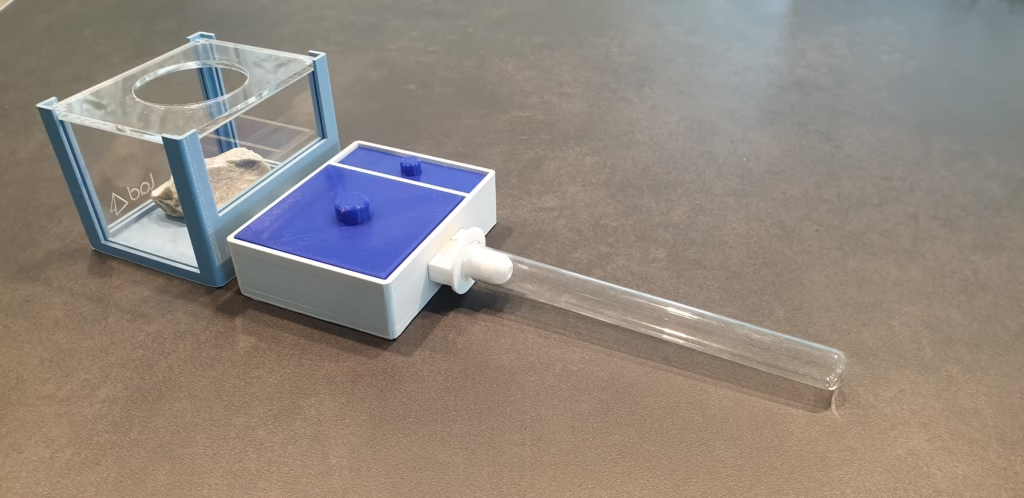
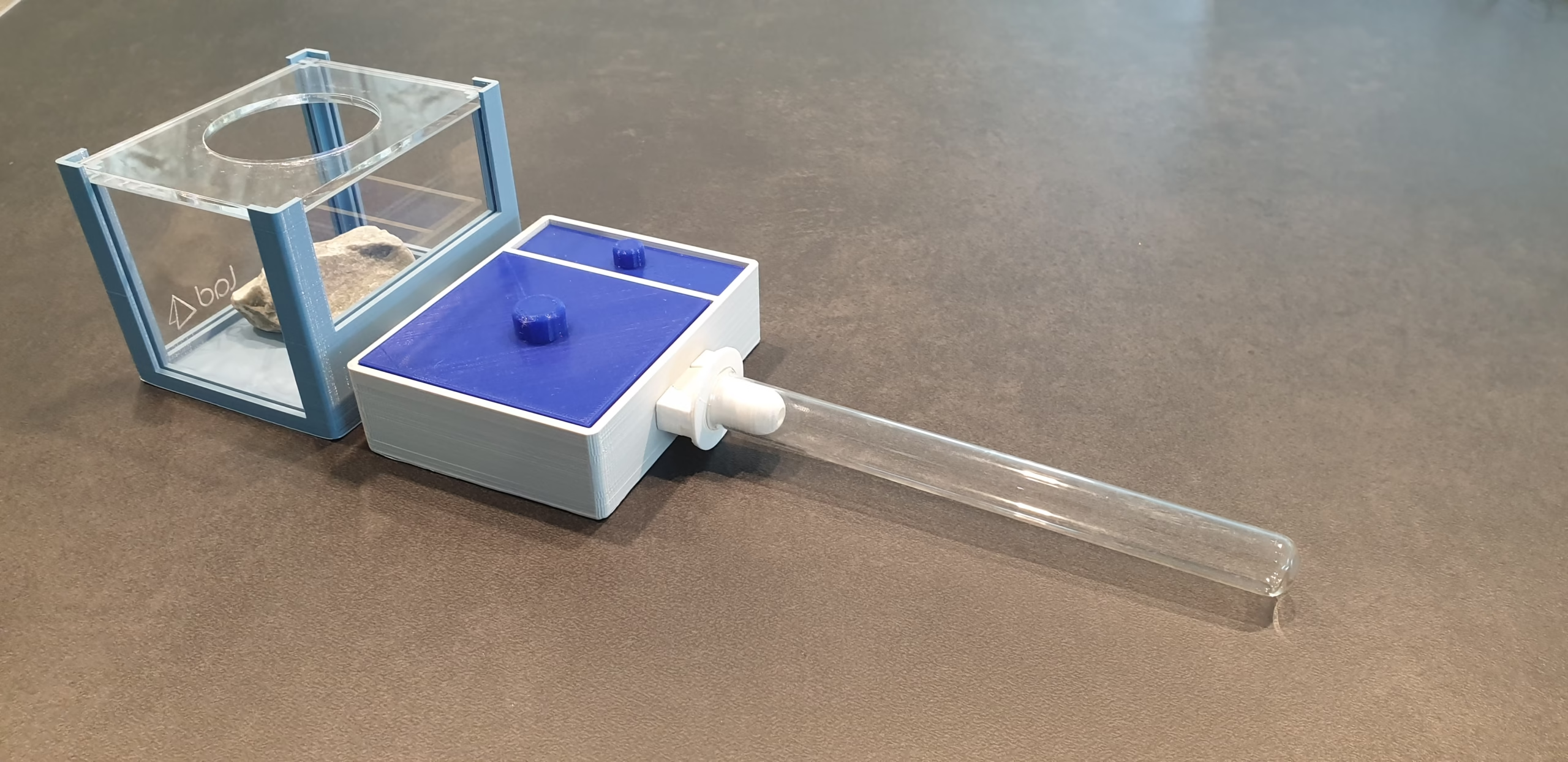
- 3D‑printed plastics: modular and customisable; ensure layer gaps are sealed for escape‑prone species.
- Ytong (AAC): excellent moisture retention and natural‑like humidity — hydrate carefully to avoid over‑wetting.
- Naturalistic: looks great, but harder to observe and can be trickier to keep escape‑proof.
Think about ventilation, how the nest will connect to your current outworld, and how easy it will be to inspect and clean galleries without disrupting brood. For more on choosing nest types, see our guide to best ant nest types.
3. Preparing for the move — safety checks & supplies
- Set the new nest up a few days ahead: position, hydrate (if required) and let conditions stabilise so it’s reliably attractive.
- Match background conditions: keep temperature and humidity of the new area similar to the old nest (or slightly more attractive — a bit darker, slightly better humidity).
- Escape‑proofing: reapply PTFE/fluon to rims and any furniture; check seals on tubing and lids. If you need a refresher on barriers, our Ant Escape‑Proofing 101 guide covers best practices.
- Backup test tube: have a pre‑prepared test tube with water and cotton ready for an emergency queen relocation — see our Moving Your Queen Ant to a Formicarium guide for step‑by‑step tips.
- Tools & supplies: soft brushes, forceps, clean vials/test tubes, small syringes for hydration, shallow containers for baiting, gloves for handling PTFE, spare tubing and plugs.
Pro tip: labelling entrances and temporarily blocking unwanted openings with Blu‑Tack or removable plugs can help channel movement into the new nest.
4. Upgrade methods — How to move ants safely (Day 0 → Week 1)
Pick the method that fits your time and your colony’s temperament. Below is a practical timeline for a low‑stress passive move with optional encouragement steps.
Day 0 — setup and safety checks
- Install the new nest in final position. Hydrate and let conditions stabilise for 24–72 hours.
- Apply PTFE/fluon, check all seals and make the connecting tube short (10–30 cm is a good start) and unobstructed.
- Place new nest slightly darker (cover with a cloth) and, if appropriate for the species, a touch warmer by 1–3°C than the old nest (see species panel).
- Place attractive bait at the new nest entrance (sugar water for energy, protein for brood‑rearing). Our feeding guide has bait ideas and recipes.
- Have an emergency test tube ready with water, cotton and a small hiding spot for the queen if needed.
Day 1–3 — encourage migration gently
- Passive method: leave the two nests connected and minimise disturbance. Most movement will happen overnight or early morning.
- If you want to gently encourage movement: remove or slightly reduce the water source in the old nest (see hydration heuristics below). Do this in small steps — avoid shocking the brood.
- Optional heat encouragement: apply a gentle heat pad near the new nest on low, or use a lamp at a safe distance. Increase new‑nest temp by 1–3°C above the old nest — do not exceed species safe range.
- Replenish bait at the new entrance every 12–24 hours so scouts keep visiting.
Week 1 — consolidation and checks
- Check brood distribution daily for the first 3–7 days. If brood and queen are primarily in the new nest and workers are travelling, leave the connection for another week before removing the old nest.
- Inspect the old nest carefully — some brood or late movers may remain. Slowly close off unused entrances rather than removing the nest immediately.
- Monitor stress signs (see monitoring section below). Adjust temperature/humidity by small amounts if the colony looks unsettled.
Manual moves — last resort
Only use if passive methods fail or the queen’s safety is at risk. Move workers with a soft brush or aspirator into the new nest; transfer the queen into a test tube then place the tube inside the new nest. Work calmly and quickly; have everything staged before you start. Expect higher stress and increased brood risk. For detailed test‑tube handling see our guide on test tube setup.
Hydration & heat heuristics — how much to change when encouraging moves
- Hydration steps: when drying the old nest, reduce water availability in small increments: for small nests remove 1–3 mL of free water per day or blot a damp substrate with paper for 24–48 hours. For larger Ytong blocks reduce applied water by 10–20% per day until the old nest is noticeably drier but not desiccated.
- Humidity targets (approx):
- Small/dry species (Iridomyrmex, Melophorus): RH 10–35%.
- Generalist species (many Polyrhachis, Camponotus minor): RH 35–60%.
- Humid lovers (Camponotus large, Oecophylla): RH 60–80%.
- Heat encouragement: raise the new nest by 1–3°C relative to the old nest to make it thermally preferable. Use a thermostat or low‑watt heating mat; avoid spikes. If brood appears lethargic or ants cluster at cool edges, reduce heat immediately.
- Safe temperature bands (very approximate):
- Cool species: 18–24°C
- General tropical/subtropical: 20–30°C
- Desert specialists: 25–40°C (daytime spikes OK, provide cool retreat)
5. If they won’t move — troubleshooting flow
Short decision flow — try one change at a time and wait 24–48 hours between adjustments.
- Are scouts visiting the new nest? If no → improve bait/entrance visibility and ensure no drafts/bright light at the entrance.
- Are scouts visiting but workers won’t move brood? If no → increase attractiveness (gentle heat + slightly higher humidity if species likes it); remove water source slowly in old nest.
- Are ants alarmed or frantic? If yes → remove heat and bright lights immediately; reduce handling and let the colony calm for 48 hours.
- After a week still no move and nest is overcrowded → consider a careful manual move or splitting the colony into extra modules (with emergency test tube for queen).
Quick troubleshooting tips: dry old nest a touch (10–20% RH equivalent), darken the new nest, bait at the new entrance and try gentle heat. If the colony becomes disoriented or brood looks damaged, stop and revert changes.
6. After the move — monitoring, care & pests
- Stress check: watch for frantic behaviour, massing at exits, or workers milling without direction. A few hours to a day of disorientation is normal; persistent distress isn’t.
- Inspect escape‑proofing: double‑check PTFE coatings, seals and any tubing junctions after the first night.
- Hydration & feeding: new nests dry differently. Check moisture levels daily for the first week and adjust water sources accordingly. Resume normal feeding after 24–48 hours unless the colony seems agitated.
- Brood distribution: some brood may be left behind — inspect the old nest carefully before fully removing it. Leave the old nest connected but closed off for 7–14 days if possible.
- Pest check: moving nests can spread mites or hitchhikers. If you’re concerned, consult our guide on preventing mites for inspection and quarantine tips.
Keep light disturbance low for a few days so the queen and brood can settle.
Common mistakes to avoid
- Upgrading too early into a huge, unused nest — causes humidity and mould problems.
- Using excessive heat to force movement — risks brood loss or queen stress.
- Poor escape‑proofing when connecting modules — ants will find that one small gap (see barrier guide).
- Rushing into manual moves without a backup test tube for the queen.
Tools & checklist before you start
- New nest pre‑hydrated and stabilised (if needed)
- Fresh PTFE / fluon
- Secure tubing & plugs for connections
- Soft brushes, forceps, small scoops
- Pre‑prepared test tube with water & cotton (for emergencies)
- Food baits (sugar water, protein source) — see feeding guide for bait recipes
- Heat source for encouragement (optional) and a thermometer / hygrometer
- Labels, Blu‑Tack or temporary plugs to close unwanted entrances
Visual aids — photos & simple diagrams
Below are photographs/diagrams to clarify common setups. These are illustrative — use them as a guide, not a blueprint for every species.

These are schematic — heat should be diffused, and barrier areas should be checked for gaps.
Local biosecurity note
If you keep wild‑caught colonies or move nest material between regions, check local regulations and biosecurity advice. Moving soil, nest material or live colonies between bioregions can spread pests, mites, or non‑local strains. When in doubt — don’t move wild substrate and always sterilise or discard material responsibly. Check your state/territory biosecurity pages if you’re unsure before transporting live colonies.
Downloads & one‑page checklist
Grab a printable one‑page checklist (PDF) to stage your upgrade and tick off supplies: Download the Formicarium Upgrade Checklist (PDF).
Final thoughts — make it smooth
- Upgrade when occupied space hits roughly 70–80%.
- Prefer gradual expansion; modules are your friend.
- Escape‑proof everything — ants will test every gap dawn to dusk. If you need help, our escape‑proofing guide is handy.
- Watch species preferences and make small, reversible changes — behaviour beats numbers.
With planning, patience and sensible containment, your colony will settle into their new home with minimal drama. If you’ve done a move before, share a tip or two in the comments — other keepers appreciate real‑world tricks.
Related: Moving Your Queen Ant to a Formicarium • Keeping Your Ants Safe from Mites and Pests • Choosing the Best Formicarium
External background: formicaria.

I simply could not go away your web site prior to suggesting that I really loved the usual info a person supply in your visitors? Is going to be back frequently to check out new posts