Banded Sugar Ant Queen & Care Guide (Camponotus consobrinus)
A practical Australian guide to the banded sugar ant: Camponotus consobrinus queen identification, size, founding, feeding, housing, colony growth and beginner care.
The banded sugar ant, Camponotus consobrinus, is one of Australia’s most recognisable native sugar ants and one of the better large species for patient beginners. If you searched for “banded sugar ant”, “sugar ant queen” or “sugar ants Australia”, this guide is focused on the Australian keeper question: how to identify a likely banded sugar ant queen and care for the colony without rushing the founding stage.
That does not mean it should be treated like a generic “starter ant”. Banded sugar ants have their own rhythm: they are often nocturnal, nest in soil or under cover, tend honeydew-producing insects in the wild, grow at a moderate pace, and can bite and spray formic acid when threatened. Good care comes from matching those traits rather than just copying a generic test-tube-and-honey routine.
Quick answer: is this the banded sugar ant?
Banded sugar ants are usually Camponotus consobrinus: large Australian sugar ants with obvious pale/orange banding on the gaster, mostly evening or night foraging, and a larger heavy-bodied queen. A likely banded sugar ant queen should be kept quietly in a dark test tube; if she is correctly identified as Camponotus consobrinus, she is usually treated as fully claustral and does not need feeding until the first workers arrive.
If you only searched “sugar ant queen”, be careful: Australia has multiple Camponotus species and local lookalikes. Use the banded gaster, size, body shape and collection context together rather than one photo angle. When in doubt, keep the queen in a safe generic test tube setup and avoid species-specific assumptions until the ID is stronger.
Quick care summary
| Scientific name | Camponotus consobrinus |
| Common names | Banded sugar ant, sugar ant |
| Native range | Australia; commonly reported through eastern/southern areas, with records and educational sources noting range from northern Queensland down to Tasmania. Similar Camponotus species can replace it in drier regions. |
| Typical worker size | Roughly 5–15 mm depending on caste and colony; queens are much larger than workers. |
| Activity | Often nocturnal or strongest in cooler evening/night conditions. |
| Temperament | Generally manageable, but workers can bite and use formic acid defensively. |
| Founding | Usually kept as fully claustral: queen founds alone in a test tube without feeding until first workers. |
| Growth speed | Moderate; slower than many tiny fast-growing species. |
| Diet in captivity | Regular sugar source plus small protein feeds once workers arrive. |
| Best first setup | Test tube setup, dark cover, stable room temperature, low disturbance. |
| Beginner rating | Good beginner species if you can be patient and avoid over-checking. |
Identification: what makes a banded sugar ant?
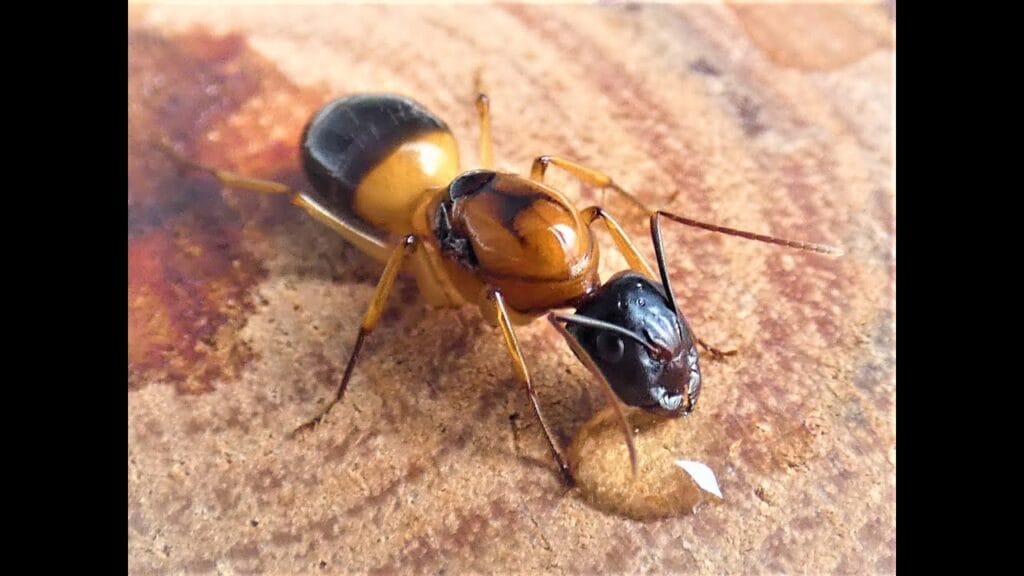
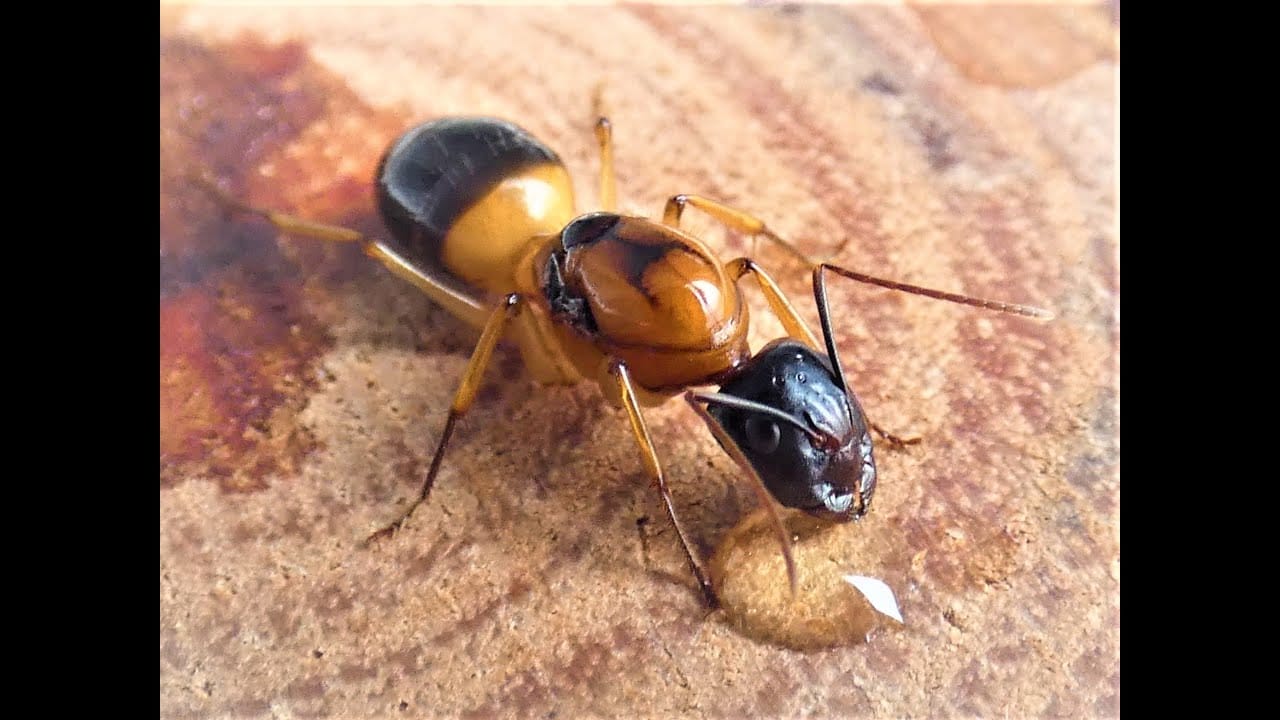
Banded sugar ants are usually recognised by the contrast between a dark head, orange-brown thorax/legs, and a darker gaster with an orange-brown band. Workers vary in size within the same colony, which is normal for Camponotus. Larger workers can look noticeably more robust than smaller workers.
Useful ID clues include:
- large ant compared with many common house ants
- black or very dark head
- orange-brown thorax and legs
- dark gaster with a visible orange-brown band
- workers of different sizes in mature colonies
- often seen foraging at night or in cooler conditions
Be careful with identification. Australia has many Camponotus species, and colour can vary by lighting, age, camera settings and locality. If you caught a queen and are unsure, photograph the queen from above and side-on and compare with local records before assuming it is definitely C. consobrinus.
Banded sugar ant queen checklist
| Queen build | Look for a noticeably larger, heavier ant with a fuller thorax than workers. A queen should not just be a slightly bigger worker. |
| Colour pattern | Likely Camponotus consobrinus queens usually show the dark head, orange-brown thorax/legs and banded gaster pattern, but lighting can mislead. |
| Wings or wing scars | A dealate queen with wing scars is a strong clue after a flight, but some queens keep wings for a while. Wings alone are not proof of fertility. |
| Collection context | Record suburb/region, date, weather, time of day and whether she was found after rain or warm humid conditions. |
| Care decision | If the ID is likely but not perfect, use quiet fully-claustral Camponotus founding care first: dark test tube, stable conditions, minimal disturbance. |
Natural habitat and behaviour
In the wild, banded sugar ants are associated with open forest, woodland, parks and suburban backyards. Educational sources describe them nesting in soil in open ground or hidden under rocks and logs, often with a raised ring of loose soil around the nest entrance.
They are omnivores, but their name is not random: they are strongly attracted to sweet liquids. Wild workers collect nectar and other plant secretions, and they tend aphids or other sap-feeding insects for honeydew. That behaviour matters in captivity because sugar is not just a treat — it is a core energy source for workers.
They also need protein for brood development. In nature that can come from insects and other animal material. In captivity, feeder insects are the cleaner and safer option than random wild-caught bugs, especially if pesticides are possible.
Do banded sugar ants sting?
No — they do not sting like bull ants or jumping jacks. But they are not harmless. Workers can bite, and like other formicine ants they can spray formic acid from the acidopore at the tip of the abdomen. A bite plus acid can be painful and irritating.
For normal captive care, avoid bare-hand handling. Use a catch cup, soft brush, tweezers or a secondary tub when doing maintenance. They are not a dangerous species for most keepers, but “no sting” does not mean “play with them”.
Catching and settling a queen
After a nuptial flight, a dealate queen that has shed her wings is usually the target for keepers. Put her into a clean test tube setup as soon as possible: water reservoir, firm cotton plug, dry chamber, breathable cotton at the entrance, and a dark cover.
For this species, the biggest beginner mistake is fussing. A newly caught Camponotus queen can sit quietly for a while before laying or before brood becomes obvious. Constant checking, bright light and repeated vibration do not help.
Founding checklist
- Use a clean test tube with fresh water and firm cotton.
- Leave enough dry chamber for the queen to turn around comfortably.
- Cover the tube with foil, red film, cardboard or paper.
- Keep it somewhere stable and dark.
- Check briefly about once a week, not daily.
- Do not feed unless you have a good reason to believe the queen is not founding normally for this species.
- If you are unsure whether she is a banded sugar ant queen, take clear photos and keep the setup conservative rather than repeatedly moving or feeding her.
- Record capture date, suburb/region, weather, and whether she had wings.
Banded sugar ant queens are generally treated as fully claustral in hobby care, meaning the queen uses her stored reserves to raise the first workers. Offering food before workers can create mould, stress and mess. If you are uncertain about the species ID, ask a local ant-keeping group before changing the founding approach.
Timeline: eggs to first workers
Exact timing depends on season, temperature, queen condition and disturbance. As a practical expectation, many keepers should think in weeks and months, not days. A moderate founding timeline is normal for Camponotus.
| Stage | What you may see | Care approach |
|---|---|---|
| First days | Queen settles, may pull cotton, may sit still | Dark, stable, no feeding |
| Egg stage | Small white egg pile, sometimes hard to see | Brief weekly checks only |
| Larvae | Brood looks larger and less egg-like | Keep stable; do not disturb to “help” |
| Pupae | Cocoons/pupae depending on conditions | Keep tube secure and humid |
| First workers | Small nanitic workers appear | Begin tiny sugar and protein feeds |
If a queen has no brood after a long period, do not immediately assume failure. Check the basics first: is she actually a queen, is the tube too dry or flooded, is she being checked too often, was she caught too late or unmated, and is the season causing a slowdown?
Feeding banded sugar ants
Once workers arrive, feeding becomes simple but should still be controlled. Workers need carbohydrates for energy and protein to raise larvae. Sugar alone keeps workers active, but protein is what supports colony growth.
Good sugar options
- sugar water
- honey water
- commercial ant nectar
- tiny drops on foil, cotton, feeding trays or a liquid feeder
Because this species is strongly sugar-attracted, avoid flooding the tube with sticky liquid. A tiny drop is plenty for a young colony. Sticky spills can trap workers, feed mould and make the setup disgusting.
Good protein options
- small pieces of mealworm
- cricket pieces
- roach pieces
- fruit fly or other clean feeder insects
- occasional boiled egg yolk in tiny amounts, removed quickly
Use captive-bred or safely sourced feeders where possible. Wild insects can carry pesticides, mites or other contaminants. If you use wild-caught prey, avoid anything from sprayed gardens, roadsides or unknown chemical areas.
Feeding frequency by colony size
| Colony stage | Sugar | Protein | Notes |
|---|---|---|---|
| Queen only | Usually none | None | Keep dark and quiet. |
| First workers | Tiny drop every few days or as needed | Very small piece once or twice weekly | Remove leftovers quickly. |
| 10–30 workers | Available regularly in small amounts | Small feeder pieces 1–3 times weekly | Watch brood response, not just worker appetite. |
| Growing colony | Use a safer liquid feeder or tray | Increase portions gradually | More brood generally means higher protein demand. |
Housing: test tube, outworld, then nest
Do not move banded sugar ants into a big formicarium just because the queen has workers. A test tube remains excellent housing for a young colony. The first upgrade should usually be a small outworld attached to the tube, not a large nest. If you are still choosing equipment, follow the starter kit guide first, then upgrade only when worker numbers justify it.
A practical progression:
- Queen-only stage: covered test tube, no outworld needed.
- First workers: feed carefully at the tube entrance or in a tiny container/outworld.
- Small colony: test tube connected to a small outworld for cleaner feeding.
- Established colony: small nest or formicarium with controlled hydration and room to expand.
- Larger colony: larger outworld, stronger barrier, more reliable feeding system.
Nest style
In the wild they are ground-nesting ants, often associated with soil, rocks and logs. In captivity, they can be kept in acrylic, 3D-printed, Ytong or plaster-style nests if hydration and chamber size are appropriate. The key is not the brand of nest — it is matching the nest size to the colony.
Young colonies do better in snug, secure spaces. Oversized nests make it harder for ants to manage humidity, defend brood, find food and keep rubbish away from living areas.
Temperature, humidity and seasonal rhythm
Care sheets often list warm room-temperature ranges for this species, and a range around the low-to-high 20s °C is commonly used by keepers. Treat those numbers as a guide, not magic. Locality, season, ventilation and nest moisture matter.
A safer way to think about conditions:
- avoid cold drafts and sudden heat spikes
- avoid direct sun on tubes or nests
- provide hydration without making the nest wet
- allow a moisture gradient where possible
- expect slower activity in cooler periods
- do not “cook” the colony to speed up growth
If heating is used, heat only part of the setup so the ants can choose. Never place a test tube or nest where heat can build up uncontrollably.
Escape risk and handling
Banded sugar ants are larger than many species, so they are not the worst escape artists, but mature workers are strong and active. As the colony grows, use a proper lid, secure tubing and a maintained barrier such as PTFE/Fluon or talc where appropriate.
Do not rely on “they seem calm” as a barrier. A hungry or disturbed colony can explore quickly, especially at night.
Common problems and fixes
Queen eats eggs
Often linked to stress, disturbance, vibration, poor conditions or an unmated/weak queen. Reduce checking, keep the tube dark and stable, and avoid unnecessary feeding.
No workers after a long wait
Check whether she has eggs or larvae, whether the tube is drying, whether she was captured after a proper flight, and whether cool temperatures are slowing development. Do not repeatedly move her between tubes unless the current one is unsafe.
Workers ignore protein
Small colonies may ignore large or unsuitable prey. Try smaller pieces, fresher feeder insects, or different feeder types. Protein demand is usually higher when larvae are present.
Mould in the tube
A tiny spot far from the queen is not always an emergency. Spreading mould near brood, failed cotton, flooding or bad smell is more serious. Prepare a fresh tube and let them move if the old tube becomes unsafe.
Colony seems inactive
Remember that this species is often more active at night. Check after dark before assuming something is wrong. Also consider temperature, season, brood stage and whether the colony has enough food.
Is the banded sugar ant good for beginners?
Yes, with the right expectations. Banded sugar ants are a good beginner species because they are large, interesting, fairly hardy and easy to feed. They are not ideal for someone who wants instant growth or constant daytime activity.
Choose this species if you want:
- a large Australian native ant
- visible workers and caste variation
- a species with interesting sugar-foraging behaviour
- a colony that rewards patience
Maybe choose something else if you want:
- very fast colony growth
- constant daytime activity
- a tiny desktop nest immediately
- a species you can safely handle by hand
Related Ant Keeping Australia guides
- Known Native Australian Ant Species — source-of-truth species list and coverage map
- Best Beginner Ant Species in Australia
- How to Find Queen Ants in Australia
- What to Do with a Queen Ant After Capture
- Test Tube Setup for Queen Ants
- Ant Feeding Guide
- Formicarium Upgrade Guide
- Ant Barrier Guide
- Mould in an Ant Nest
Sources and further reading checked
- Toohey Forest Environmental Education Centre — Banded Sugar Ant
- AntWiki — Camponotus consobrinus
- Canberra Colony — Camponotus consobrinus
- Ant Shack — Banded Sugar Ant care sheet
Bottom line
The banded sugar ant is not just “a generic beginner ant”. It is a large, nocturnal-leaning, sugar-loving Australian Camponotus that nests in soil, tends honeydew insects in the wild, bites and sprays formic acid defensively, and grows best when kept quietly through founding. Give it darkness, patience, clean sugars, sensible protein and a slow upgrade path, and it becomes one of the most rewarding Australian species to keep.
Banded sugar ant keyword FAQ
What is Camponotus consobrinus?
Camponotus consobrinus is the banded sugar ant, one of Australia’s better-known large sugar ants. It is popular with keepers because colonies are impressive, workers are easy to observe, and the species is more manageable than many highly defensive ants.
How do you identify a banded sugar ant queen?
A banded sugar ant queen is larger and heavier-bodied than workers, with a fuller thorax, a broad gaster and often visible wing scars after mating. For Camponotus consobrinus, also look for the banded gaster pattern and the large sugar-ant build; if the ID is uncertain, keep the queen safe in a test tube and compare several photos rather than guessing from colour alone.
How big do banded sugar ant colonies get?
Banded sugar ant colonies can become large over time, so beginners should start with a test tube setup but plan ahead for an outworld, secure tubing and a sensible nest upgrade once worker numbers increase.
Are sugar ants in Australia good beginner ants?
Some sugar ants, including banded sugar ants, can be good beginner-to-intermediate ants if the keeper is patient and uses the right setup. They are not instant display colonies; the early founding stage still needs quiet, warmth, hydration and restraint.
What should I do if I found a sugar ant queen in Australia?
Put her in a clean test tube setup, keep her dark and quiet, record where and when you found her, and avoid feeding if she is likely a fully claustral Camponotus queen. If the species ID is uncertain, ask for help using several clear photos before changing care.