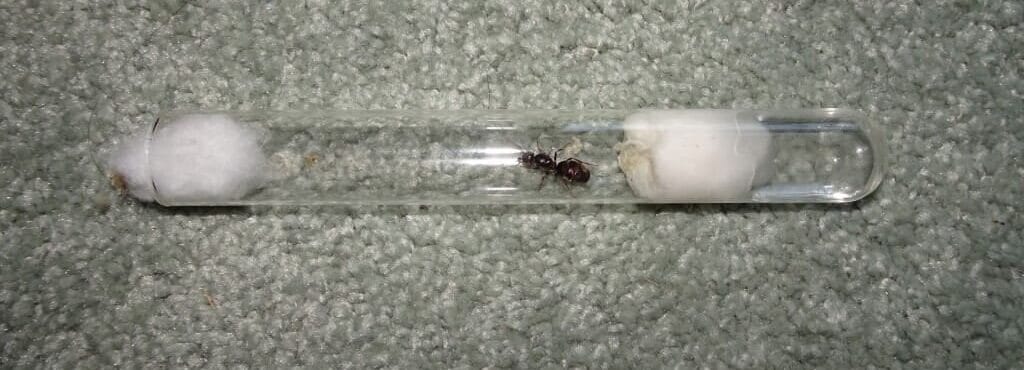
If you need to move a queen ant to a new test tube because the water has dried out, mould is spreading, or the tube is simply too crowded, this guide walks through when to move, how to prepare, and the safest transfer methods. It’s designed to help you move a queen ant to a new test tube calmly, without turning a simple job into a rescue mission.
When to move | Materials & prep | Transfer methods | Species notes & safety | Troubleshooting & FAQ
When to move a queen ant to a new test tube
Only move when it’s genuinely necessary. A queen ant in a stable founding tube is often better left alone than disturbed. The main reasons to move a queen ant to a new test tube are:
- Water reservoir dried out — urgent for founding colonies, so prepare and connect a fresh tube immediately.
- Mould is spreading — tiny isolated spots can sometimes be monitored, but spreading mould or a bad smell is a good sign to move.
- Tube is too small — brood or workers are pressed against the glass and need more room.
- Severe condensation, pooling water or broken glass — these create a real risk to brood and need an immediate move.
If you’re moving a queen from the founding stage into a larger setup, the companion guide on moving your queen from the founding stage to a formicarium is the next step after this one. It also helps to understand ant colony growth stages so you can judge whether the colony is still best kept in a tube or ready for an upgrade.
Materials checklist
- Test tubes: 13×75 mm for tiny species, 16×150 mm for standard setups, 18×150 mm for large queens or expanding colonies.
- Cotton: clean, unscented cotton for the water plug and tube closure.
- Water: fresh tap or bottled water. In a 16 mm tube, aim for roughly 15–25 mm of water behind the cotton.
- Connector tubing or tape: short flexible tubing or strong tape for a smooth join between tubes.
- Dark cover: black paper or card to make the new tube feel secure.
- Temperature control: thermometer and, if needed, a low-watt heat mat or warm shelf. Many Australian founding colonies do well around 24–26°C.
- Soft tools: soft paintbrush, curved plastic forceps, aspirator (pooter) and a small vial for temporary holding.
- Escape safety: a shallow box or tub as a secure workspace. Good barriers matter when workers decide to go sightseeing; see Ant Escape-Proofing 101.
Tip: avoid metal tweezers for live handling. Soft-tipped or plastic tools are less likely to crush brood or injure the queen.
Preparing the new test tube
- Set up a fresh tube with water behind the cotton so the open space stays dry and breathable.
- Pack the cotton firmly enough that the water won’t leak into the brood area, but not so tightly that the space becomes unusable. Leave around two-thirds of the tube free for the queen and brood.
- Place the old and new tubes end-to-end with openings touching, or join them with a short flexible tube. Secure the connection with tape so the passage is smooth and stable.
Transfer methods for moving a queen ant to a new test tube
Use the least invasive method that will do the job. Passive transfers are usually the safest option for both brood and queen. If that stalls, try a gentle nudge. Manual transfer should be reserved for immediate danger such as a dry tube, broken glass or serious mould.
Method A — Passive move (recommended)
- Align the new tube so its opening touches the old tube, then secure the join with tape or tubing.
- Darken the new tube with black paper or a small box and leave the old tube slightly brighter. Ants prefer dark, sheltered spaces and will often explore the new tube at their own pace.
- Leave the setup undisturbed and check once a day without tapping or bright light. Passive transfers commonly finish within hours to a few days; cautious species may take up to a week.
- When all workers, brood and the queen have moved, replace the cotton plug and remove the old tube.
Method B — Gentle nudge
If passive movement stalls, use environmental cues rather than direct handling:
- Make the new tube slightly warmer — usually by 2–4°C — using a warm shelf or low-watt heat mat. Keep the old tube slightly cooler or brighter.
- Place a tiny dab of sugar water or honey at the far end of the new tube to tempt workers. Keep it small, about the size of a grain of rice. For safe food options and hygiene, see the Ultimate Ant Feeding Guide.
- If needed, give one gentle puff of air or a soft tap to the old tube to encourage inspection. Don’t keep prodding them; ants do not appreciate being rushed.
- As workers begin carrying brood, the queen will usually follow. Once the move is complete, seal the new tube and leave it quiet.
Method C — Manual transfer (last resort)
Only use manual transfer when the colony is in immediate danger and passive or gentle methods are not possible. Manual handling increases the risk of injury, brood loss or queen abandonment.
- Work inside an escape-proof box and keep your soft tools ready: paintbrush, curved plastic forceps, aspirator and a temporary vial prepared with cotton and water.
- Coax the queen gently into the waiting vial with a soft paintbrush or aspirator. Don’t grab or squeeze her. If she freezes, pause and try again calmly.
- Move brood first using a slightly damp soft brush. Avoid dry forceps, which can desiccate larvae or damage them. Place the brood into the new tube before moving the queen and workers.
- Once the colony is settled in the new tube, replace the cotton, cover the tube and keep it quiet for several days.
Important: for large or sting-capable species, avoid manual handling where possible. Use connectors and passive methods instead.
Species notes — quick ID cues and cautions
Some Australian genera have their own quirks. If you keep one of these, plan the transfer with that in mind.
- Camponotus (banded sugar ants, carpenter ants) — large, slow movers that can deliver a painful bite. They usually tolerate careful handling, but passive transfers are still the better option. See the Banded Sugar Ant care guide for identification and care notes.
- Myrmecia (bull ants, Jack jumpers) — powerful stings and a very defensive temperament. Never manually handle unless you’re experienced and properly protected. Use passive connectors and read the Jumping Jack Ant care guide together with Ant Stings & Bites in Australia before attempting any move.
- Iridomyrmex (meat ants) — fast and skittish, so keep the workspace secure and favour passive or gentle nudge methods.
- Pheidole (big-headed ants) — majors can catch on narrow seams, so use slightly larger tubing or make sure the junction is smooth and well taped.
If you’re unsure of the species, stop and confirm the ID before attempting a risky transfer. A quick identification check can change the safest method from manual to strictly passive.
Troubleshooting & FAQ
Q: There’s a small patch of mould — should I move?
A small isolated white spot can sometimes be monitored if it isn’t spreading. Move the colony if mould is spreading, smells bad, or the water is contaminated. For occupied tubes, prefer a connector and passive move rather than using chemicals near the brood.
Q: The water dried out — how urgent is it?
Very urgent for founding colonies. Prepare a fresh tube immediately, connect it and warm the new tube slightly to encourage movement. If the old tube is completely dry and brood are at risk, manual transfer may be required as an emergency measure.
Q: Workers scattered when I opened the tube — now what?
Close the openings and calm the area. Use an aspirator to collect workers into a vial or guide them onto a piece of card and into a tube. Avoid chasing ants across the bench; slow, deliberate movements work better. Good escape barriers can prevent this problem in the first place.
Q: How long does a passive move normally take?
Anywhere from a few hours to several days. More cautious species may take up to a week. If nothing happens after 5–7 days, try a gentle nudge.
Q: Should I disinfect a mouldy tube with alcohol while brood is inside?
No. Do not pour alcohol into an occupied tube. Isopropyl alcohol will harm brood. Move the colony to a fresh tube first, then disinfect empty tubes separately before reuse.
After the move — settling in
- Remove the old tube only once you’re confident everyone has moved. Leaving it attached can encourage shuttling back and forth.
- Keep the new tube dark and quiet for 3–7 days. Avoid unnecessary feeding unless workers are actively foraging.
- Watch for calm clustering around the queen and brood. Frantic running or abandoned brood usually means something went wrong.
It also helps to think ahead about the environment around the tube. Stable conditions matter, so seasonal temperature and humidity management is worth keeping in mind if you’ve had repeated drying or condensation problems. If mould keeps returning, the guide on recognising and responding to mould and fungal outbreaks is a useful follow-up.
Quick checklist & timeline
Use this as a simple reference while you work.
Immediate (within 1 hour)
- Prepare a fresh test tube with 15–25 mm water behind the cotton in a 16 mm tube.
- Place tubes end-to-end or connect them with short flexible tubing, then secure the join.
- Darken the new tube and place both tubes in a slightly warmer location if possible.
Next 24–72 hours
- Prefer passive transfer and check once daily without tapping or bright light.
- If there’s no movement after 48–72 hours, try a gentle nudge with a small food lure or slightly increased warmth in the new tube.
Emergency (immediate manual move)
- Use an escape-proof box. Have the aspirator, soft brush, curved plastic forceps and temporary vial ready.
- Move brood first with a damp soft brush, then coax the queen gently into the vial. Return everyone to the new tube quickly and quietly.
After the move
- Replace the cotton plug, cover the new tube and leave it undisturbed for 3–7 days.
- Monitor calm clustering and clean any old tubes only once they are empty.
Further reading
- Test Tube Setup for Queen Ants — step by step
- The Ultimate Ant Feeding Guide
- Ant Escape-Proofing 101
- Banded Sugar Ant (Camponotus) care guide
Final safety note: if you keep, or suspect you might be dealing with, a stinging species such as some Myrmecia, avoid manual transfer where possible and know the basics of ant sting first aid. When in doubt, choose the least invasive method and keep the workspace secure.
Moving a queen ant to a new test tube is mostly about preparation, patience and using the least invasive method that will work. Get the setup right, stay calm, and the colony usually does the rest.

Just wanna remark on few general things, The website pattern is perfect, the subject material is real excellent : D.