Big-Headed Ant Care Guide
A detailed Australian guide to Pheidole antipodum: majors, minors, drier-region habitat, founding, feeding, containment and nest choice.
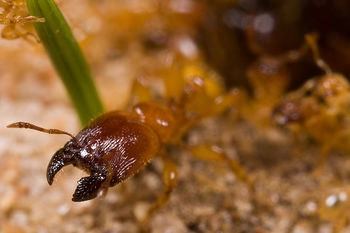
Pheidole antipodum is an Australian big-headed ant best known for its worker caste differences: small minor workers do most routine work, while larger-headed majors give the colony its “big-headed” look. That caste system is exactly what makes the species interesting — and exactly why it should not be treated like a generic beginner ant.
Compared with large Camponotus species, Pheidole colonies can feel quicker, busier and more escape-prone. The workers are small, protein demand increases as brood builds, and containment matters more than aesthetics.
Quick care summary
| Scientific name | Pheidole antipodum |
| Common name | Big-headed ant |
| Native range/habitat | Australia; AntWiki notes this species is limited to drier areas and nests in open soil or under rocks. |
| Worker castes | Minor workers plus larger-headed major workers. |
| Beginner suitability | Good for careful keepers; not as forgiving as large slow ants because workers are small. |
| Food | Sugars for worker energy; regular tiny protein feeds for larvae and major development. |
| Main risks | Escapes, overfeeding, mould, mites from feeders, oversized nests. |
Identification and caste behaviour
The big clue with Pheidole is caste difference. Minor workers are small and handle most foraging, brood care and daily work. Majors have enlarged heads and stronger mandibles. They are often described as “soldiers”, but in practice they may help with defence and breaking down larger food as the colony matures.
There are many Pheidole species, so a large-headed worker alone does not prove P. antipodum. If the source queen or colony came from drier Australian regions and matches local records, confidence improves; otherwise treat the ID cautiously.
Natural history cues for captive care
Because this species is associated with drier areas, open soil and rocks, the captive setup should not be swampy. That does not mean bone-dry: brood still needs moisture. The useful care principle is a moisture gradient — one area with reliable hydration and other areas that remain drier.
Small workers also mean they can exploit gaps that larger ants ignore. If you are coming from banded sugar ants or bull ants, assume your old “good enough” lid is not good enough here.
Founding setup
Start queens in a normal test tube setup with water, cotton and a dark cover. Keep checking brief. If the queen is correctly identified and healthy, avoid constantly disturbing her to “check progress”. Small founding colonies can fail because of stress and mould just as easily as because of poor feeding.
- Use firm cotton plugs.
- Keep the tube dark.
- Avoid loose sand or soil inside the founding tube unless you know why you are using it.
- Do not attach a huge outworld too early.
- Label date, location and suspected ID.
Feeding
Pheidole colonies often respond well to small, frequent feeding rather than large messy dumps. Tiny colonies need tiny portions: a pinhead-sized piece of mealworm, cricket leg, fruit fly or other clean feeder is better than a whole insect rotting in the outworld.
| Colony stage | Sugar | Protein | Notes |
|---|---|---|---|
| Queen only | Usually none unless species/condition requires | None | Keep quiet and stable. |
| First workers | Tiny drop or liquid feeder access | Very small feeder pieces | Remove leftovers quickly. |
| Growing colony | Regular sugar access | Protein 2–3 times weekly, adjusted to brood | Majors and larvae increase protein demand. |
| Established colony | Reliable sugar feeder | More frequent protein in controlled portions | Watch waste and mould. |
Housing and escape-proofing
The ideal early setup is boring: test tube plus a small outworld with a tight lid and a barrier that works for tiny ants. Avoid large multi-chamber nests until the colony has enough workers to use and defend the space.
Pay special attention to:
- tube joins
- feeding ports
- warped acrylic lids
- ventilation mesh size
- decor touching the barrier line
- old barrier coatings that have become dusty or humid
Common mistakes
- Overfeeding protein: causes mould and mites.
- Underestimating minors: tiny workers escape through tiny gaps.
- Moving too early: oversized nests make care harder.
- Waiting for majors too impatiently: majors usually appear after the worker force and feeding routine are established.
- Keeping soil too wet: drier-region association does not mean no water, but swampy setups are asking for trouble.
Sources and further reading checked
- AntWiki — Pheidole antipodum
- Ant Keeping Australia prior guide and media
- General Pheidole husbandry comparisons were checked only for broad captive-care principles, not treated as species-specific facts.
Related Ant Keeping Australia guides
- Best Beginner Ant Species in Australia
- What to Do with a Queen Ant After Capture
- Test Tube Setup for Queen Ants
- Ant Feeding Guide
- Formicarium Upgrade Guide
- Ant Barrier Guide
- Preventing Mites
Bottom line
Pheidole antipodum is a great species if you want caste behaviour and a busier colony, but the care hinges on small-worker containment and controlled protein feeding. Treat it like a tiny, efficient, opportunistic colony — not a big slow beginner ant.