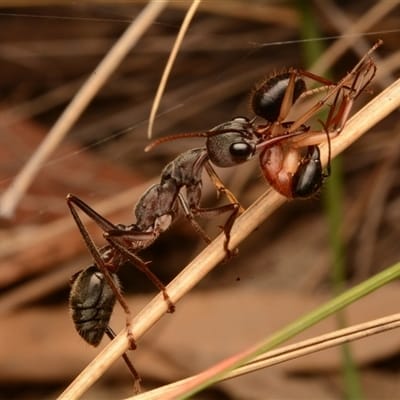
Late-Season Queen Ant Hunting in Australia
How to look for late-season queen ants safely, what changes after peak flight season, and why bull ants deserve extra respect.
Queen ant hunting is usually easiest around warm, humid conditions after rain, but late-season hunting can still produce surprises. The catch is that the further you get from peak flight season, the more important it is to manage expectations — and safety, especially around bull ants.
Quick answer
Late-season queen hunting can work, but flights are less predictable. Look after warm rain, humid evenings, storms or sudden weather changes. Check paths, lights, parks and open ground carefully. Do not dig up established nests, do not trespass, and treat bull ants and jumping jacks with respect.
What “late season” means
Australia is huge, so ant flight timing varies by state, climate and species. In many areas, peak queen hunting is spring and summer, but some species may fly later depending on rainfall, heat and local conditions. Late season does not mean impossible; it means less predictable.
Good late-season conditions
- warm day followed by humid evening
- rain after a dry spell
- storms or pressure changes
- calm conditions after rainfall
- ants suddenly active around paths/lights
- known local flights reported by other keepers
Where to look
- footpaths and driveways after rain
- under outdoor lights at night
- park edges and open ground
- near but not inside established nest areas
- quiet paved areas where queens are visible
- garden edges, logs and open soil for species that land and search quickly
How to tell a queen from a worker
Queens are usually larger, with a bulkier thorax. Dealate queens may have wing scars. Winged queens can be fertile or unfertilised, so a wingless queen found walking after a flight is usually more promising.
- large thorax
- larger body size
- wings or wing scars
- walking alone after flight weather
- not simply following a worker trail
Bull ant safety
Bull ants are incredible. They are also not beginner cuddle bugs. They have excellent vision, can be defensive, and many species have painful stings. If you are looking for bull ant queens, use containers, long tools and common sense. Do not poke nests. Do not put your hands near workers. Do not learn sprinting from insects.
Ethical queen hunting
- take only what you can care for
- do not destroy nests
- do not dig up colonies
- avoid protected areas where collecting is not allowed
- keep records of location/date/weather
- release obvious non-target insects safely
What to carry
| Item | Why |
|---|---|
| Small tubes/containers | Safe temporary collection. |
| Cotton/tissue | Padding and temporary plugs. |
| Torch/headlamp | Night visibility. |
| Phone/camera | ID photos and location/weather notes. |
| Long tweezers | Safer handling for defensive species. |
| Labels/marker | Track queen details. |
After you catch one
Do not leave queens in hot cars or sunny containers. Move them into proper test tube setups when you get home. Label each queen separately. Do not mix species or random queens unless you know exactly what you are doing.
Late-season expectations
Some late-season queens may be unmated, weak, parasitised, or from species that are harder to found. That is normal. Late-season hunting is a bonus round, not a vending machine.
Related guides
- How to Find Queen Ants in Australia
- What to Do After Catching a Queen
- Test Tube Setup for Queen Ants
- Ant Stings & Bites Safety
- Golden-Tailed Bull Ant Care
- Best Beginner Ant Species
Bottom line
Late-season queen hunting can still be worthwhile, especially after good weather triggers, but it needs patience and realistic expectations. Look carefully, collect responsibly, and give bull ants the respect they very much believe they deserve.