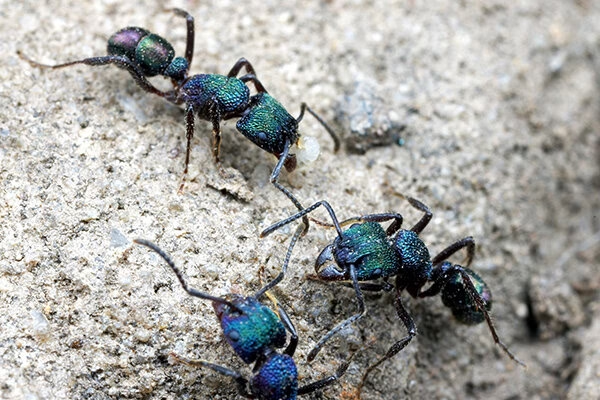
Green-Headed Ant Care Guide (Rhytidoponera metallica)
A detailed Australian guide to Rhytidoponera metallica: metallic colour, stings, semi-claustral founding, diet, seed use, housing and safety.
The green-headed ant, Rhytidoponera metallica, is one of Australia’s most beautiful ants: metallic green, blue, purple or reddish depending on the light. It is also a stinging ant with unusual colony biology, so this guide focuses on what keepers actually search for: colony structure, gamergates and reproductive workers, worker size, founding behaviour, appearance, safety and practical captive care.
Quick care summary
| Scientific name | Rhytidoponera metallica |
| Common names | Green-head ant, green-headed ant, metallic pony ant |
| Range | Endemic to Australia; widely distributed, absent from Tasmania according to common references, and introduced to New Zealand. |
| Size | Workers commonly around 5–7 mm. |
| Activity | Diurnal — active during the day. |
| Safety | Can deliver a painful venomous sting; allergy risk matters. |
| Founding | Queens are semi-claustral in references, meaning they may forage during founding. |
| Diet | Arthropods/small insects, sweet substances/honeydew, and seeds are relevant to their ecology. |
What makes this species different?
Rhytidoponera metallica is not just “a small green ant”. References describe workers and queens as similar in appearance, with queens differing mainly in size, and note unusual reproduction where workers can act as gamergates in some colony contexts. For keepers, the important takeaway is that their biology is different from a simple fully-claustral Camponotus queen.
Colony structure, gamergates and reproduction
Searchers often land here asking about Rhytidoponera metallica colony structure, gamergates, budding or worker reproduction. Keep the practical lesson conservative: this is a species group where reproduction can be less visually obvious than “big queen plus small workers”. A worker-like ant may not tell you the whole colony story.
- Do not guess caste from one blurry photo. Queens and workers can look similar compared with many beginner ants.
- Do not split or move colonies to test reproduction. That is stressful, biosecurity-dodgy and unnecessary for hobby care.
- Founding care still matters. If you have a likely queen, provide semi-claustral feeding access rather than treating her like a sealed, fully claustral sugar-ant queen.
- Expect slower growth. Smaller colony size and active foraging make secure, manageable housing more important than chasing rapid expansion.
Rhytidoponera metallica quick facts for keepers
| Worker size | Often reported around 5–7 mm. Treat them as active medium ants, not tiny house ants. |
| Appearance | Dark metallic green, blue-green, purple, bronze or reddish tones depending on light and viewing angle. |
| Gaster / abdomen colour | Usually dark with a metallic sheen rather than bright leaf-green all over. Lighting changes the colour a lot. |
| Colony structure | Usually smaller and slower than many beginner sugar ant colonies, with unusual reproductive biology in the genus. |
| Gamergate / worker reproduction notes | Some Rhytidoponera colonies are noted for gamergate or reproductive-worker style biology. Do not assume a worker-like ant is always an ordinary worker. |
| Founding behaviour | Queens are best treated as semi-claustral: provide a secure feeding area rather than sealing them away with no food access. |
| Keeper level | Intermediate. Beautiful, but the sting and active foraging make them a poor “easy first ant”. |
How to describe a green-headed ant for ID help
If you are asking another keeper to identify a suspected green-headed ant, give them useful details rather than just “green ant”. Include the location, date, approximate size, whether it was foraging alone or near a nest, and clear photos from above and side-on.
| Feature | What to look for | Keeper caution |
|---|---|---|
| Colour | Metallic green-blue, purple, bronze or reddish reflections. | Colour changes with light, camera angle and individual variation. |
| Body shape | Compact, active, ponerine-looking ant with a noticeable sting risk. | Do not use colour alone for a confident species ID. |
| Size | Workers are often around 5–7 mm. | A single phone-photo estimate can be misleading. |
| Behaviour | Day-active foraging, often on paths, soil, logs or open ground. | Active foraging does not mean it is safe to handle. |
| Colony clues | Often smaller/slower colonies than fast sugar-ant colonies. | Do not dig up wild nests to “check”. |
Habitat, range and natural behaviour
Green-headed ants occur in a wide range of Australian habitats including woodland, forests, deserts and urban areas. Common references describe them as native to mainland Australia, absent from Tasmania, and reported as introduced in New Zealand including Norfolk Island records. For ant keeping purposes, the key point is not to move colonies between regions; keep local wildlife local and follow your state or territory rules.
They nest underground, under logs, stones, twigs and shrubs, in decayed wood, and sometimes in termite mounds. They are daytime foragers and prey on arthropods, collect sweet substances such as honeydew, and are associated with seed dispersal.
Sting safety
This is the section not to hand-wave. Green-headed ants can sting, and the sting can be painful. Sensitive people can have serious allergic reactions to insect venom. Do not handle them bare-handed, do not keep them where children or pets can access them, and work inside a secondary tub when opening the setup.
If someone has trouble breathing, facial/throat swelling, dizziness, collapse or widespread allergic symptoms after a sting, treat it as an emergency.
Founding behaviour and early colony care
Because queens are described as semi-claustral, they may need access to food while founding. That makes this species less “set and forget” than a fully claustral queen. A good founding setup is a test tube attached to a tiny, secure foraging area where food can be offered without disturbing the queen directly.
- Provide a water reservoir.
- Keep the nesting tube dark.
- Offer tiny sugar and protein feeds in the foraging area.
- Remove leftovers quickly.
- Minimise vibration and direct handling.
- Expect slower, steadier early growth than the fastest beginner species.
If you are unsure whether you have a queen, avoid making a hard species or caste call from a phone photo alone. Compare carefully with reliable references, ask an experienced keeper, and never release or move ants across regions.
Feeding
Use a mixed diet: sugar water/honey water/nectar for energy, small insects for protein, and optional small seeds/seed mix if your colony shows interest. Do not assume seeds replace protein; larvae still need animal protein or equivalent nutrition. For portions and feeder options, use the ant feeding guide and the mealworm feeder guide.
Housing
A test tube and small outworld works well early. Later, use a secure small nest with a foraging area. Because this species is active and can sting, design the setup so you can feed and clean without exposing yourself to loose workers. If you are choosing the next nest, compare options in Ant Nests 101 and the formicarium upgrade guide.
- Use lids and barriers.
- Use long tweezers.
- Keep a catch cup nearby.
- Do not open the nest casually.
- Label the colony as stinging.
- Work inside a secondary tub when feeding established colonies.
Common mistakes
- treating them like a harmless display species
- trying to found a queen with no feeding access
- bare-hand handling
- forgetting that they are daytime active and may rush openings
- keeping them as a first colony despite sting concerns
Sources and further reading checked
- Green-head ant overview
- AntWiki — Australian Rhytidoponera species list
- Ant Park — Rhytidoponera metallica care notes
Related Ant Keeping Australia guides
- Known Native Australian Ant Species — source-of-truth species list and coverage map
- Best Beginner Ant Species in Australia
- What to Do with a Queen Ant After Capture
- Test Tube Setup for Queen Ants
- Ant Feeding Guide
- Formicarium Upgrade Guide
- Ant Barrier Guide
- Preventing Mites
Bottom line
Rhytidoponera metallica is gorgeous and genuinely interesting, but it is a stinging, active, semi-claustral species. Keep it for the behaviour and colour, not because you want an easy first ant.
Green-headed ant keyword FAQ
What is Rhytidoponera metallica?
Rhytidoponera metallica is the green-headed ant, a metallic Australian ant known for its green-blue sheen, active workers and noticeable sting. In ant keeping, it is best treated as a cautious intermediate species rather than a tiny beginner pet.
How big are Rhytidoponera metallica workers?
Green-headed ant workers are usually medium-sized ants, commonly reported around 5–7 mm. Exact worker size varies by colony and individual, but keepers should plan for strong, active workers that need secure lids and careful handling.
What does Rhytidoponera metallica look like?
Workers usually look dark and metallic, with green, blue, purple or reddish reflections depending on light. That metallic sheen is helpful, but it is not a complete identification by itself; use location, body shape, size and reliable references together.
How large does a Rhytidoponera metallica colony get?
A green-headed ant colony is usually smaller and slower than many fast-growing sugar ant colonies, but it can still become busy and defensive. Plan for a secure outworld, controlled feeding and enough space once workers are established.
What is unusual about Rhytidoponera metallica colony structure?
The genus is known for unusual reproductive biology, including colonies where reproductive workers can matter. For keepers, the safe practical lesson is simple: do not treat every worker-like ant as ordinary, and do not assume this species behaves like a standard fully claustral queen species.
What is a gamergate in green-headed ants?
A gamergate is a reproductive worker. In keeper terms, it means colony reproduction may not be as visually simple as one obvious queen and many non-reproductive workers. Do not disturb a colony trying to prove this; just provide stable care.
Do green-headed ants reproduce by budding?
Some search results and references discuss complex colony reproduction in Rhytidoponera. For hobby care, avoid forcing splits or moving colonies between locations. Keep the colony intact, secure and local.
Do green-headed ants have queens?
Yes, but green-headed ant reproduction can be more complicated than simple queen-and-worker species, and some colonies may involve reproductive workers or gamergate-style reproduction. Identify founding status carefully before making care decisions.
Are green-headed ants found on Norfolk Island?
Some references discuss Rhytidoponera metallica beyond mainland Australia, including New Zealand/Norfolk Island context. For Australian keepers, the important rule is biosecurity: do not move ants between regions and do not release captive colonies.